Forehead filler in Gangnam-gu: what overseas patients should know near Gangnam station
- 공유 링크 만들기
- X
- 이메일
- 기타 앱

Direct answer summary
Around Gangnam station on Gangnam-daero in Seoul, there are plastic surgery clinics that focus strongly on filler procedures, including a dedicated facial filler center where board-certified plastic surgeons design the forehead line according to your profile and facial balance. For overseas patients, it is usually possible to arrange an online consultation, plan a short visit of a few days for the procedure and early check-up, and then continue follow-up online once you return home.
Introduction
Many people who come to the Gangnam area are interested in refining their side profile without surgery. A common concern is a flat or slightly sunken forehead that makes the face look two-dimensional in photos. Forehead filler has become a popular, office-based option for softening the profile and creating a gentle, rounded curve from hairline to brow.
Near Gangnam station on Gangnam-daero, one plastic surgery clinic with a strong focus on eye surgery and filler procedures runs a dedicated facial filler center. There, board-certified plastic surgeons perform area-specific filler treatments, including the forehead, nose, cheeks, chin, under-eye, nasolabial folds, and lips. A full-time anesthesiology and pain medicine specialist supports the clinic’s overall safety system.

This guide explains what forehead filler is, who may consider it, how the procedure is usually done in the Gangnam area, what results to expect, and how to plan your visit as an overseas patient.
What is forehead filler
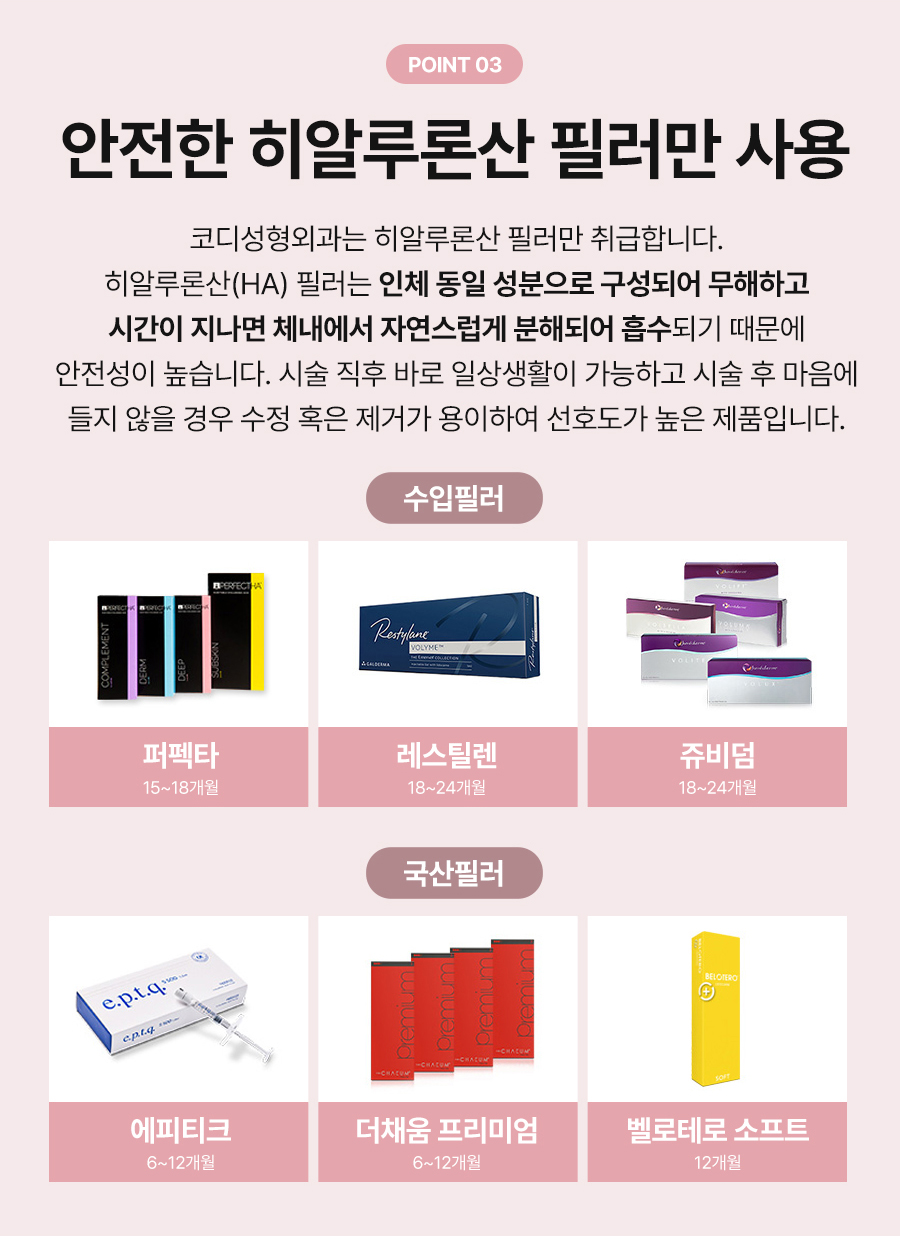
Forehead filler is an injectable treatment using hyaluronic acid filler placed in the forehead to correct flatness, dents, or visible bony contours. The goal is to create a smoother, more rounded forehead line that looks natural from the front and side.
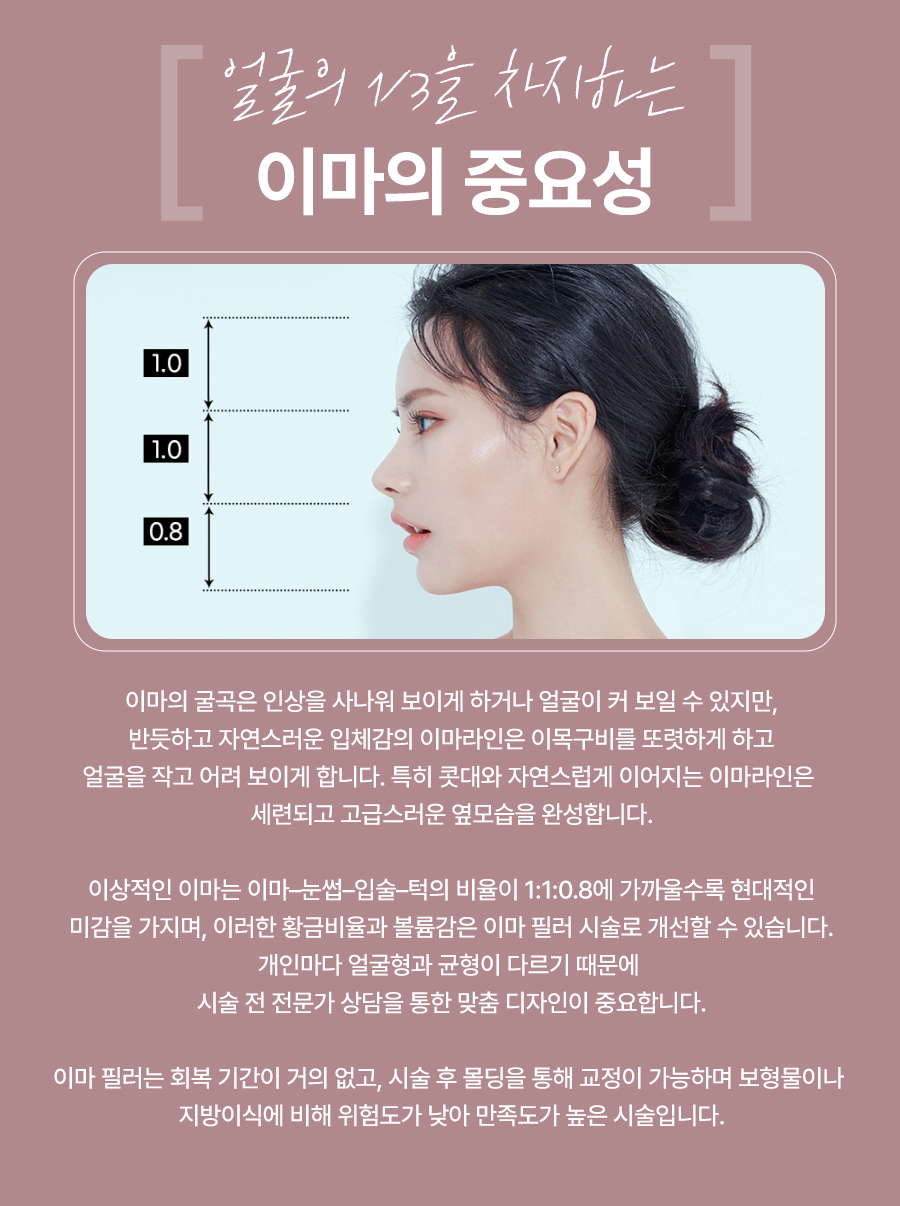
In many Korean aesthetic designs, an attractive forehead has a gentle curve from the hairline down to the eyebrows. When the forehead is very flat or slightly sunken, the side profile can look sharp or hollow. By adding carefully measured volume with filler, surgeons aim to soften this transition, giving the face a more three-dimensional and sometimes more youthful impression.
Because hyaluronic acid is a gel-like substance that the body can gradually break down, forehead filler is considered a non-surgical and reversible option compared with fat grafting or forehead implants. The procedure is usually done in a treatment room with local anesthesia, takes a relatively short time, and has minimal downtime for most patients.
Aesthetic goals and design
The key aesthetic goals of forehead filler in the Gangnam area include:

A gentle, continuous curve from hairline to brow without obvious steps or bumps.
A side profile that looks softer and more three-dimensional, rather than flat.
A balanced relationship between the forehead, nose, and chin when viewed from the side.
A style that matches the patient’s preference, whether softer and more feminine or subtle and refined.
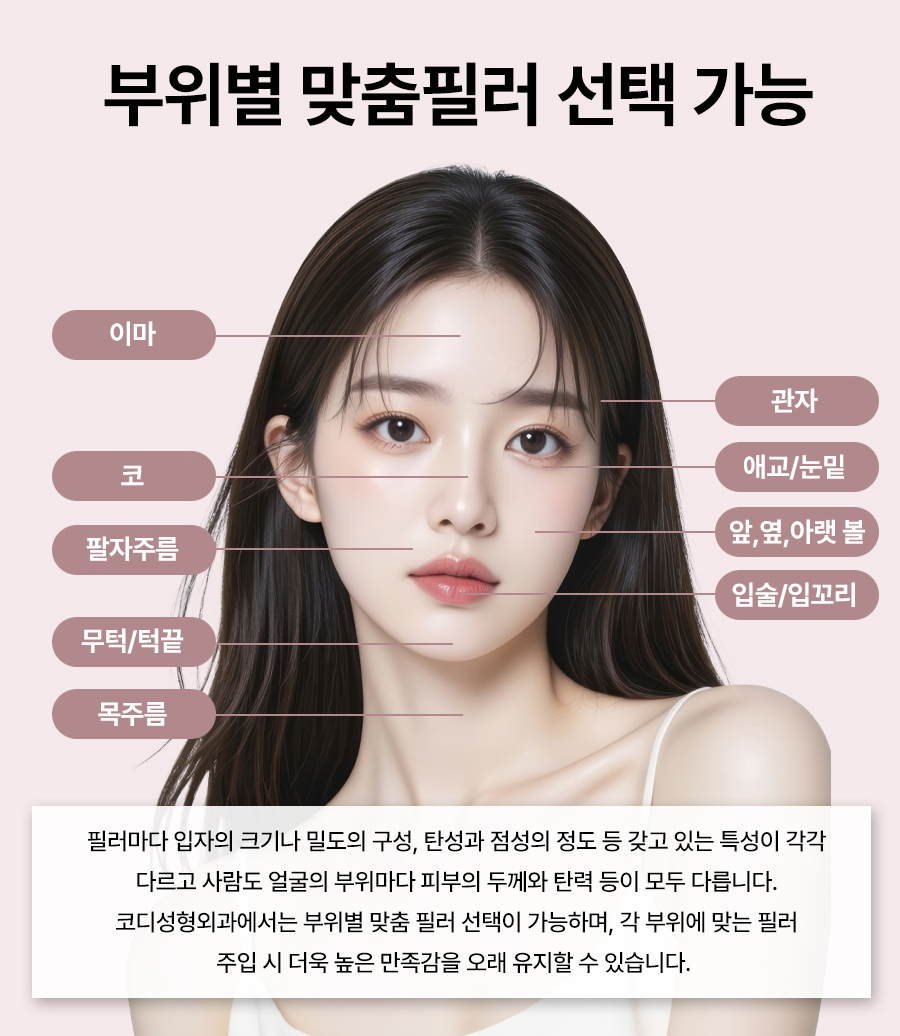
At a filler-focused plastic surgery clinic, the surgeon will usually analyze your face from multiple angles, including profile photos, to decide how much volume is needed and where it should be placed. Because the clinic runs a segmented filler center with different menus by facial area, the surgeons are used to adjusting filler type and injection depth depending on skin thickness and existing volume.
Who may consider forehead filler
Forehead filler can be considered by a wide range of adults, but it is not suitable for everyone. In general, it may be appropriate if you:
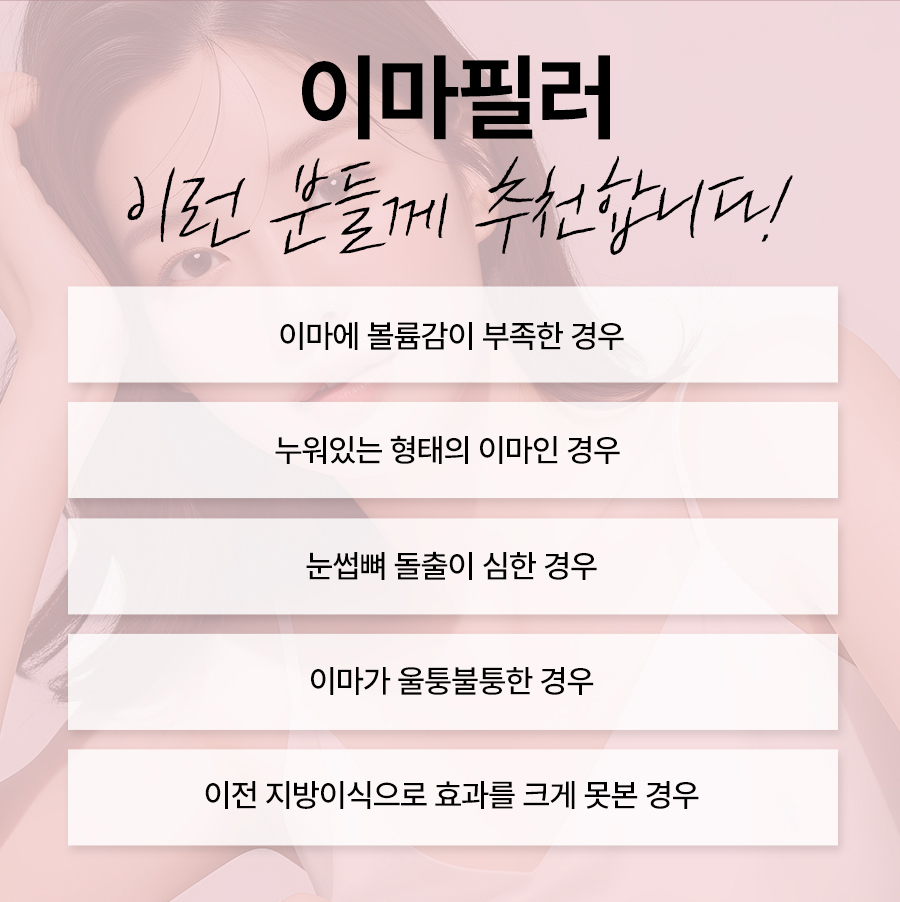
Have a very flat or slightly sunken forehead that makes your face look two-dimensional, especially in side-view photos.
See visible bony ridges, dents, or uneven contours on the forehead that you would like to smooth.
Want to test a new forehead shape before deciding on more invasive options such as fat grafting or an implant.
Prefer a quick, office-based procedure with local anesthesia and relatively short recovery.
Are comfortable with the idea that the result is temporary and may require maintenance sessions.
On the other hand, forehead filler may not be ideal if you have severe skin laxity, very thick and heavy forehead skin that may not show subtle volume changes well, or if you expect a permanent result from a single session. People who are not willing to return for touch-ups, or who have unrealistic expectations about perfection or guaranteed outcomes, should discuss this carefully with the surgeon.
A detailed medical consultation is also important if you are pregnant, breastfeeding, have a history of severe allergies, autoimmune conditions, or previous forehead fillers or fat grafting. The surgeon will assess your individual situation and may recommend alternative approaches or timing.
Consultation and design points in Gangnam-gu
In a busy district like Gangnam-gu, clinics can vary widely in how carefully they plan forehead filler. For overseas patients, a structured consultation is especially important because you may have limited time on site.
Key design factors usually discussed include:
Overall facial balance: The forehead line should harmonize with the nose bridge, brow position, and chin projection. Overfilling the forehead can make the nose look smaller or the face look top-heavy.
Side profile target: Surgeons often aim for a smooth S-shaped curve when viewed from the side, avoiding a sharply protruding or artificial look.
Gender and style: Some patients prefer a softer, rounder curve associated with a more feminine impression; others want only a subtle enhancement that keeps a more neutral or refined style.
Skin thickness and existing volume: Thicker skin or more subcutaneous tissue may require different filler consistency and injection depth compared with thin skin with visible bone structure.
A clinic that operates a dedicated facial filler center with separate menus for the forehead, nose, cheeks, chin, under-eye, nasolabial folds, and lips is more likely to pay attention to these nuances. Board-certified plastic surgeons there can choose filler types and injection planes according to the specific area and your individual anatomy.
For overseas patients, many clinics near Gangnam station offer online consultations using photos and video calls. During this step, it is helpful to send clear front, 45-degree, and side-view photos without heavy makeup so the surgeon can pre-plan your design.
Procedure overview
While each clinic has its own protocol, forehead filler in the Gangnam area generally follows similar steps.
Pre-procedure assessment Before the injection, the medical team will:
Review your medical history, including allergies, medications, previous fillers or fat grafts, and any history of bleeding disorders.
Discuss your goals, show example curves or diagrams, and set realistic expectations about volume and longevity.
Take standardized photographs from different angles for design and record-keeping.
Mark injection points and plan the depth and direction of filler placement.
Anesthesia and comfort
Forehead filler is usually performed under local measures such as:
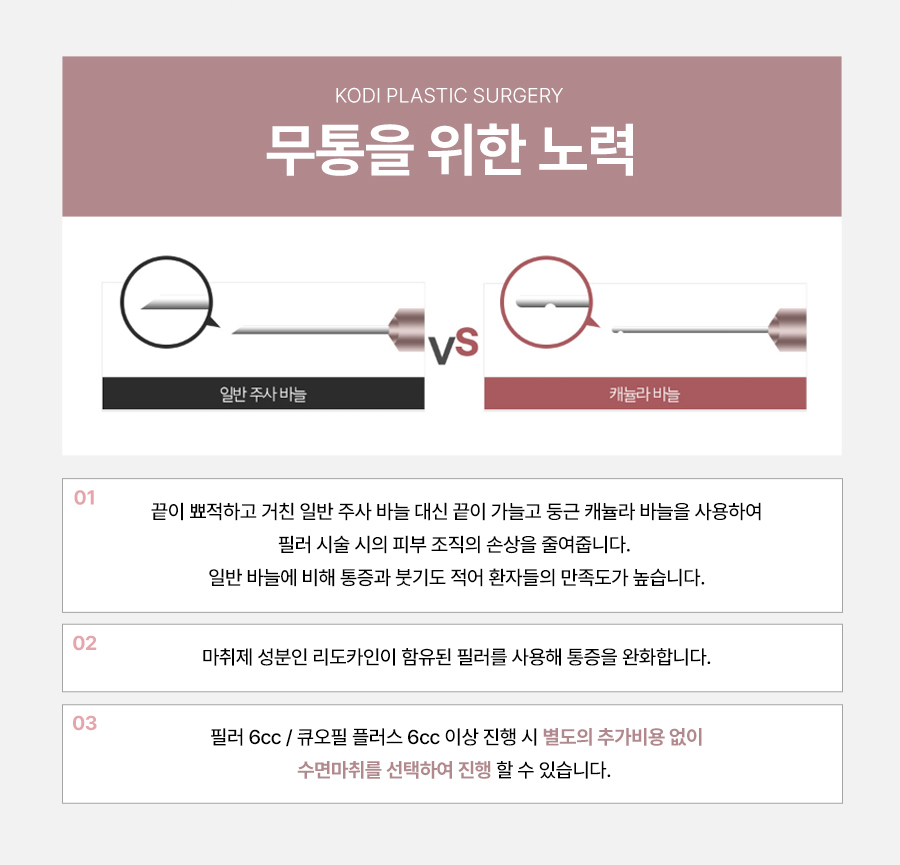
Topical anesthetic cream applied to the skin.
Local anesthetic injections in specific points if needed.
At the clinic described in this guide, a full-time anesthesiology and pain medicine specialist is on staff. This does not mean deep anesthesia is used for forehead filler, but it supports structured pain control protocols and emergency readiness throughout the facility. For patients who are anxious or sensitive, you can discuss what comfort measures are available and appropriate for you.
Injection technique
The specific technique depends on the surgeon’s preference and your anatomy, but in general:

Clinicians choose techniques and instruments based on each patient's anatomy and safety considerations. Filler is placed in layers to reduce lumpiness and to create a smooth, continuous curve. The surgeon frequently checks symmetry between left and right sides, sometimes having you sit up during the procedure to reassess the profile. The amount of filler is adjusted gradually rather than all at once, to avoid overcorrection.
Duration and immediate aftercare
Time spent in the treatment room is often short—commonly under an hour to allow for preparation and anesthesia—while the injection itself is usually even shorter.
After the procedure:
You may have mild swelling, redness, or small needle marks, which usually improve over a few days.
Some tightness or tenderness when raising your eyebrows can occur temporarily.
Most patients can return to light daily activities the same or next day, but it is wise to avoid intense exercise, saunas, or alcohol for a short period as advised by the clinic.
- Results, longevity, and maintenance
- Expected results
- With well-planned forehead filler, you can generally expect:
A smoother, more rounded forehead contour when viewed from the front.
A softer, more three-dimensional side profile, with less flatness or hollowness.
A slightly younger or less harsh impression, especially if previous bony ridges were visible.
Onset and settling
The new shape is visible immediately after the procedure, but mild swelling may make the forehead look slightly fuller at first. Over several days, swelling usually subsides and the filler integrates with surrounding tissues, giving a more natural appearance.
Longevity
The duration of results varies by product, the volume injected, and individual metabolism; outcomes are temporary and maintenance may be required. The exact duration depends on:
The specific filler product and its cross-linking.
The amount injected.
Your individual metabolism and lifestyle.
Because the forehead is a relatively stable area compared with lips or nasolabial folds, some patients experience longer-lasting effects here. However, it is still considered temporary. Touch-up sessions may be recommended to maintain your ideal contour. For overseas patients, it is helpful to discuss a long-term plan, including how often you might realistically return to Korea or whether you will maintain with a local clinic in your home country.
Safety, risks, and how the clinic addresses them
All medical procedures carry some risk, and forehead filler is no exception. Common, usually mild side effects include:

Bruising, redness, or swelling at injection sites.
Temporary tenderness or tightness.
Minor asymmetry or the feeling that one side is slightly different from the other.
Less common but more significant issues can include:
Over- or under-correction, requiring adjustment or additional filler.
Visible lumps or irregularities if filler is placed too superficially or in uneven layers.
Rare vascular complications if filler accidentally enters a blood vessel, which can lead to skin damage or, in very rare cases, visual problems.
To reduce these risks, it is important to:
Choose a clinic where board-certified plastic surgeons who understand forehead anatomy and danger zones perform the injections.
Use appropriate cannulas or needles and safe injection planes.
Ensure that hyaluronidase, an enzyme that can dissolve hyaluronic acid filler, is readily available in case of complications or unsatisfactory results.
The clinic near Gangnam station mentioned earlier emphasizes a structured safety system, supported by a full-time anesthesiology and pain medicine specialist. This contributes to overall monitoring protocols, emergency response readiness, and staff training, even though forehead filler itself is a minor procedure.
Comparison with other options
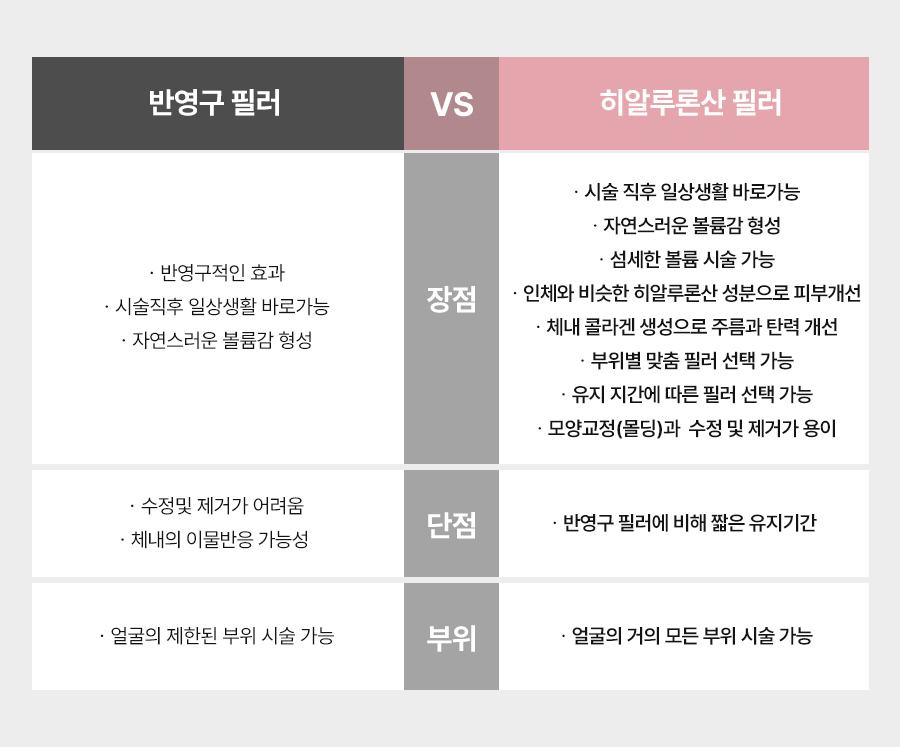
When considering forehead contouring, you may hear about alternatives such as fat grafting or implants.
Fat grafting
Fat grafting involves harvesting your own fat from another area, processing it, and injecting it into the forehead. Compared with filler:
It is more invasive and usually performed in an operating room setting.
Downtime is longer because both the donor site and forehead need recovery.
Some of the fat is absorbed over time, so the final volume can be less predictable.
If it settles well, it may last longer than hyaluronic acid filler.
Implants or surgical contouring
Forehead implants or bony contouring involve surgery with incisions and more extensive anesthesia.
These options can provide a more permanent change.
Recovery time is longer, with swelling and possible bruising lasting several weeks.
They are usually considered when a patient wants a major, long-term change and is willing to accept surgical risks and downtime.
Position of forehead filler Forehead filler sits between these options as:
A good first step for those wanting to test a new contour before committing to surgery.
A reversible and adjustable option, since hyaluronic acid can be dissolved if needed.
A choice for people who prefer minimal downtime and an office-based procedure.
Online consultation and pre-visit preparation for overseas patients
If you live outside Korea, planning ahead is important to make your visit efficient.
During this stage, you can:
Send clear photos of your face from front, 45-degree, and side views, without filters.
Explain what bothers you about your forehead and side profile.
Share your medical history, including medications, allergies, and previous aesthetic procedures.
Ask about expected volume, approximate number of syringes, and how many days you should stay in Seoul.
It can be helpful to prepare a short checklist of questions, such as:
- Who will perform the injection, and are they a board-certified plastic surgeon?
- What type of filler is usually used for the forehead at this clinic?
- How does the clinic handle emergencies or complications?
- How many days after the procedure is the recommended follow-up visit?
Expected Korea visit timeline
Many overseas patients arrange relatively short visits for a forehead filler, but timing depends on individual needs and pre-treatment assessments. As an illustrative example, a visit might include an in-person consultation, the procedure (either the same day or a subsequent day depending on pre-assessment), and a brief follow-up appointment—discuss a personalized schedule with the clinic to fit your travel plans.

Day 1: In-person consultation and design
You arrive at the clinic near Gangnam station, review your goals with the surgeon, and have a physical examination. If both sides agree, the procedure may be done on the same day, or scheduled for the next day depending on timing and your preference.
Day 1 or Day 2: Procedure day
The actual forehead filler procedure, including preparation and injection, usually takes under an hour. You can typically leave the clinic shortly after, with basic aftercare instructions.
Day 2 or Day 3: Short follow-up
A quick check-up allows the surgeon to review symmetry, swelling, and early results. Minor adjustments are sometimes made at this stage, depending on the plan.
Return home
Most patients can fly home within a few days after forehead filler, as long as there are no complications and the surgeon agrees. Online follow-up can continue through photos and messages.
- Aftercare and lifestyle tips
- Immediately after the procedure
- In the first days after forehead filler, clinics commonly advise:
Avoid pressing or massaging the forehead unless the medical team specifically instructs you to do so.
Sleep on your back if possible, especially the first night, to avoid pressure on the area.
Refrain from saunas, hot baths, intense exercise, and alcohol for a short period, as these can increase swelling or bruising.

Short-term monitoring You should monitor for unusual symptoms such as:
Severe or increasing pain that does not improve with time.
Sudden color changes in the skin, such as whitening or dark patches.
Visual disturbances, such as blurred vision or sudden loss of vision.
If any of these occur, seek immediate medical attention and contact the clinic. These signs can indicate rare but serious complications that need urgent management.
Long-term care and maintenance In the weeks and months after your procedure:
Follow up with the clinic as recommended, sending photos if you are back in your home country.
Discuss when a touch-up might be appropriate if you like the result and want to maintain it.
Inform any future practitioner about your previous forehead filler before having new treatments.
Why choose a specialized facial filler center near Gangnam station
The Gangnam area is known for its concentration of aesthetic clinics, but they do not all have the same focus. Choosing a clinic that treats eyes and fillers as its two main pillars, rather than offering every possible service equally, can be beneficial if forehead contour is your main concern.
A dedicated facial filler center with separate menus for the forehead, nose, cheeks, chin, under-eye, nasolabial folds, and lips suggests that the team has built up area-specific know-how. At the clinic described here, three board-certified plastic surgeons perform filler procedures, supported by a board-certified anesthesiology and pain medicine specialist. This structure can be reassuring for overseas patients who value both design and safety.
Multilingual support through English, Chinese, and Japanese web pages also makes it easier to communicate your goals and understand instructions. The location on Gangnam-daero in Seocho-gu, within the broader Gangnam commercial district and close to Gangnam station, is convenient if you are staying in central Seoul.
FAQ
Is forehead filler painful and what does it feel like?
Most patients describe forehead filler as mildly uncomfortable rather than very painful. Topical anesthetic cream and, if needed, small local anesthetic injections are used to reduce discomfort. You may feel pressure or a pushing sensation as the filler is placed, and some tightness afterwards when you raise your eyebrows. These sensations usually improve over a few days.
How much downtime should I expect after forehead filler in Gangnam-gu?
Downtime is generally short. Many people return to light daily activities the same or next day. You may have mild swelling, redness, or small bruises that can be covered with makeup after the skin has settled, usually within a day or two. Intense exercise, saunas, and alcohol are often restricted for a short period, so it is wise to plan your schedule accordingly.
Can I switch later to fat grafting or forehead implant surgery after having filler?
Yes, many patients use forehead filler as a way to test a new contour before deciding on more permanent options. If you later choose fat grafting or an implant, the surgeon may recommend waiting until most of the filler has naturally broken down, or using hyaluronidase to dissolve remaining filler before surgery. This timing should be discussed with your surgeon to ensure safe planning.
How long should I stay in Seoul for forehead filler as an overseas patient?
For most overseas patients, a stay of about 2 to 4 days is usually sufficient for consultation, procedure, and an early check-up, assuming there are no complications. Some people combine the visit with other treatments or sightseeing and stay longer. It is important to confirm the recommended schedule with the clinic in advance and to avoid booking your return flight immediately after the procedure, in case you need an additional short review.
Soft call to action
If you are considering forehead filler in Gangnam-gu and would like to understand whether it suits your forehead shape, lifestyle, and travel plans, an online consultation is a practical first step. By sharing clear photos and your medical background in advance, you can receive a more personalized assessment and plan your visit to the Gangnam station area with greater confidence.
This article is for general information only and does not replace a personal consultation with qualified medical professionals. Individual suitability, risks, and outcomes vary, and all decisions about treatment should be made after direct discussion with a licensed doctor.




- 공유 링크 만들기
- X
- 이메일
- 기타 앱


댓글
댓글 쓰기