How to Choose a Safe Forehead Filler Clinic Near Sinnonhyeon
- 공유 링크 만들기
- X
- 이메일
- 기타 앱

Useful checks include: written emergency protocols, availability of hyaluronidase, monitored sedation with appropriate monitoring equipment, and documented staff training and follow-up procedures. Some clinics in the Gangnam area may offer organized filler menus and access to anesthesiology services, but services and staffing vary—confirm details directly with the clinic.
This guide explains what forehead filler does, who it may suit, how a filler-focused plastic surgery clinic near Sinnonhyeon usually approaches the procedure, and what overseas patients can expect when planning a visit to Korea.
What forehead filler is and who it is for
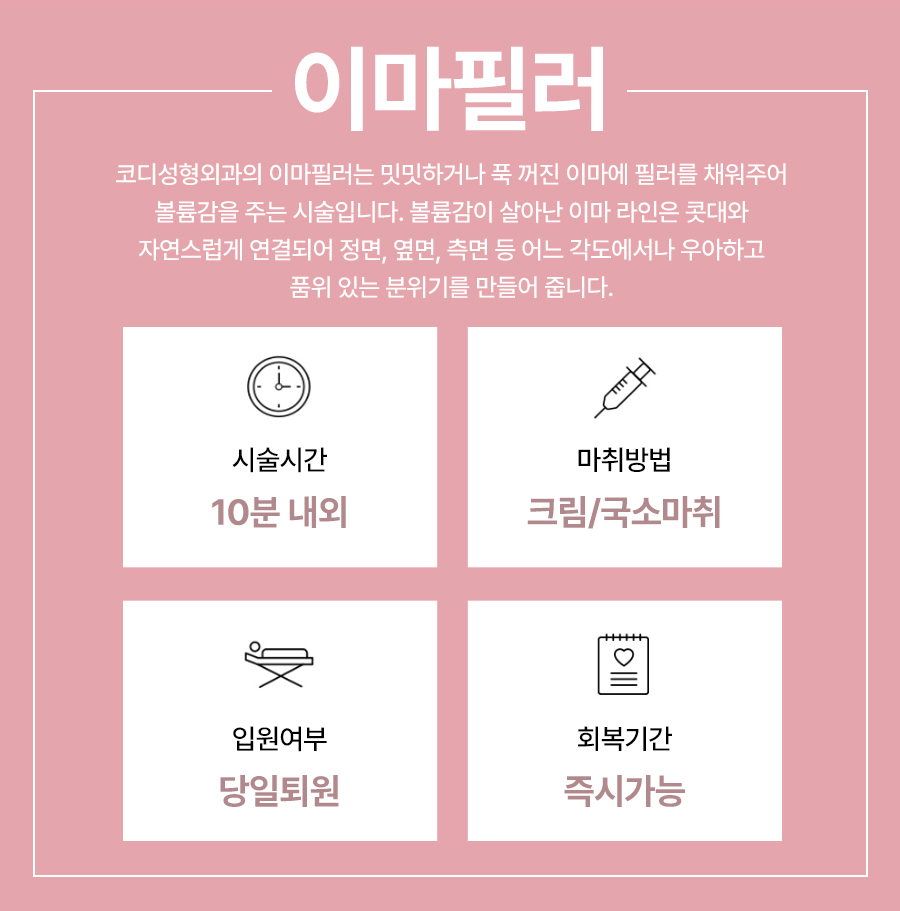
Forehead filler is a non-surgical treatment that uses hyaluronic acid gel to add volume and smoothness to the forehead. The goal is to create a gentle, continuous curve from the hairline to the eyebrows, instead of a flat, bony, or uneven surface.

e, the result is adjustable.
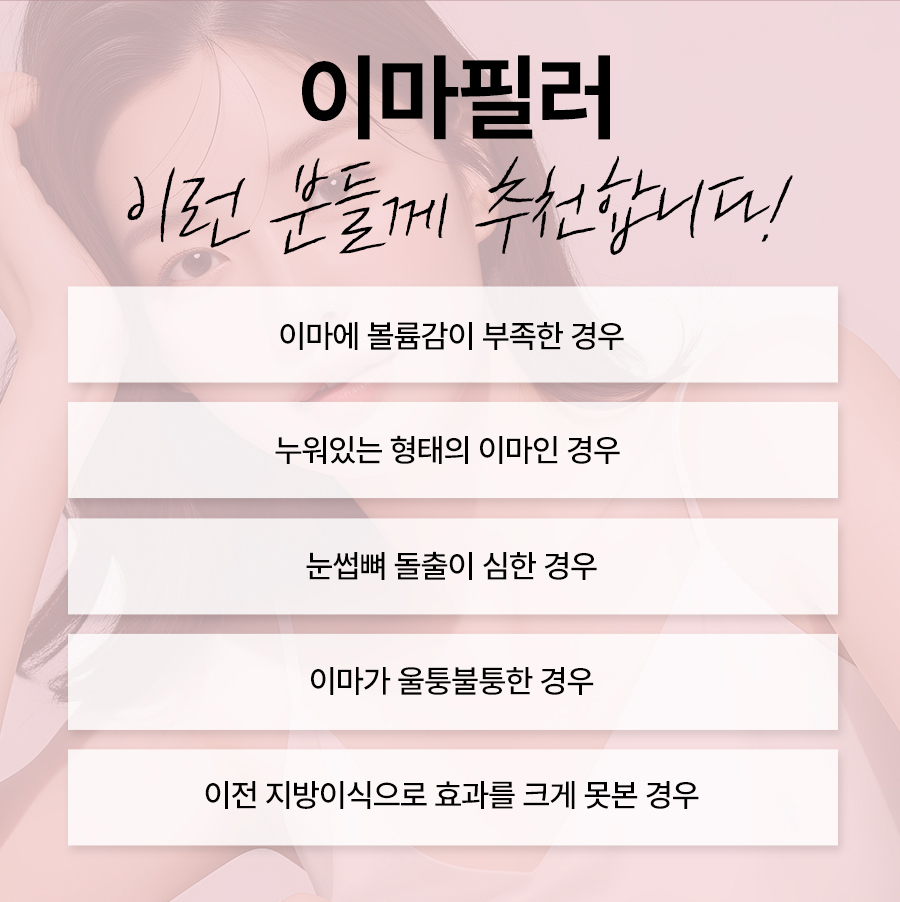
Forehead filler may be suitable if you have a flat or slightly sunken forehead, a very bony or masculine-looking forehead, early fine lines, or if you want a softer profile without implants or fat grafting. Some patients prefer forehead filler for a noticeable but natural-looking improvement with relatively little downtime; consult a clinic to see whether it fits your goals and lifestyle.
Key potential benefits include a short procedure time, immediate volume change, and the possibility of fine-tuning with touch-ups. Compared with fat grafting or implants, forehead filler is less invasive, usually involves only local anesthesia or light sedation, and often allows you to return to daily life quickly.
What defines a good forehead filler clinic near Sinnonhyeon
In the Sinnonhyeon and Gangnam area, many clinics offer filler. However, not all of them focus on it as a main service. When you are looking for a clinic for forehead filler, especially as an overseas patient, it helps to look at how the clinic is structured and how much experience they have with different facial areas.
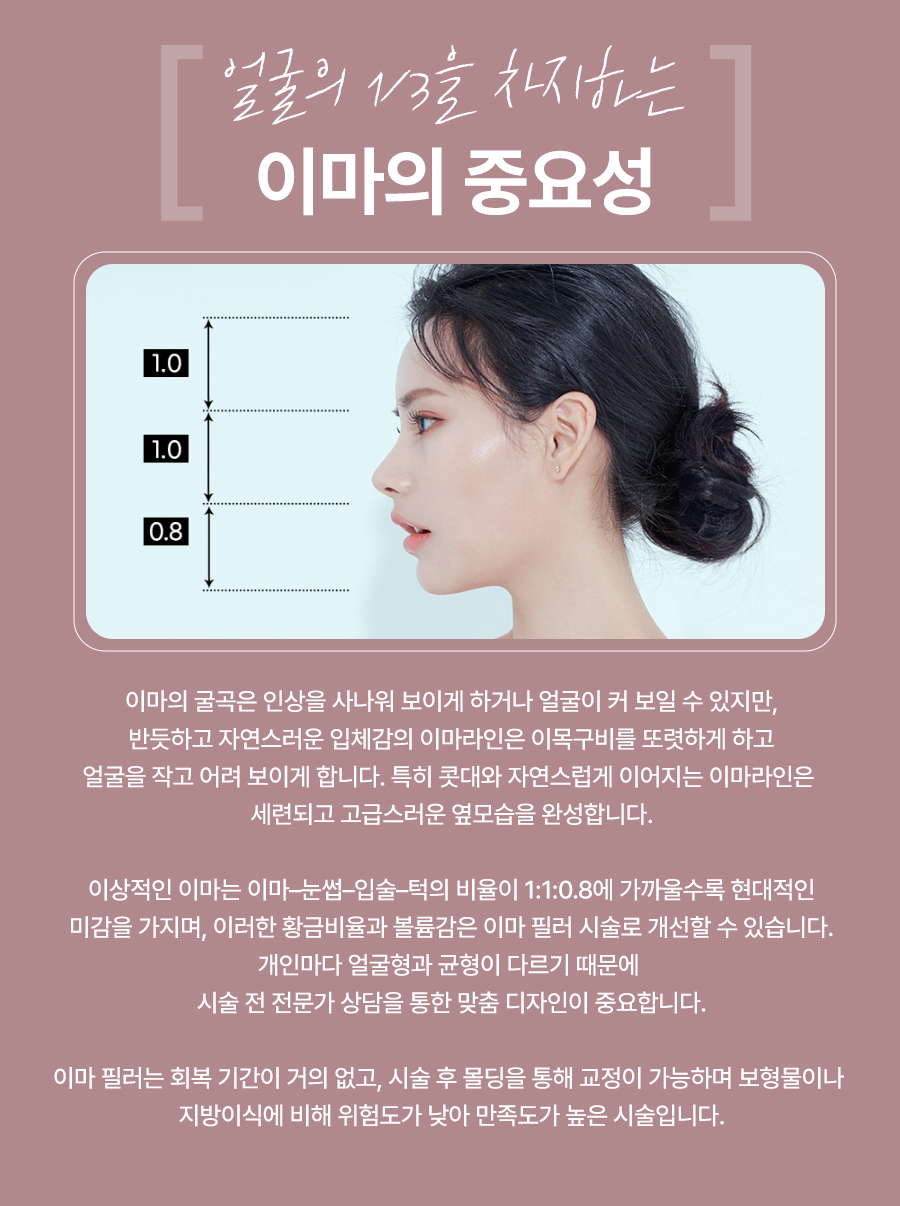
A clinic that is experienced with forehead filler usually performs filler in many areas, not only the forehead. Common areas include nose, cheeks, chin, under-eye, nasolabial folds, and lips. This broader experience matters because the forehead is only one part of the face. To create a balanced side profile, the doctor needs to understand the relationship between the forehead, nose, brow, and temples.
Another important point is customized planning by area. A careful clinic will not simply inject filler into a flat forehead. They will analyze your forehead from the front and side, check for asymmetry, and look at how your forehead connects with your eyebrows and nose. The design is then adjusted to your facial structure and your style preference: subtle and natural, softer and more feminine, or slightly fuller for a youthful look.
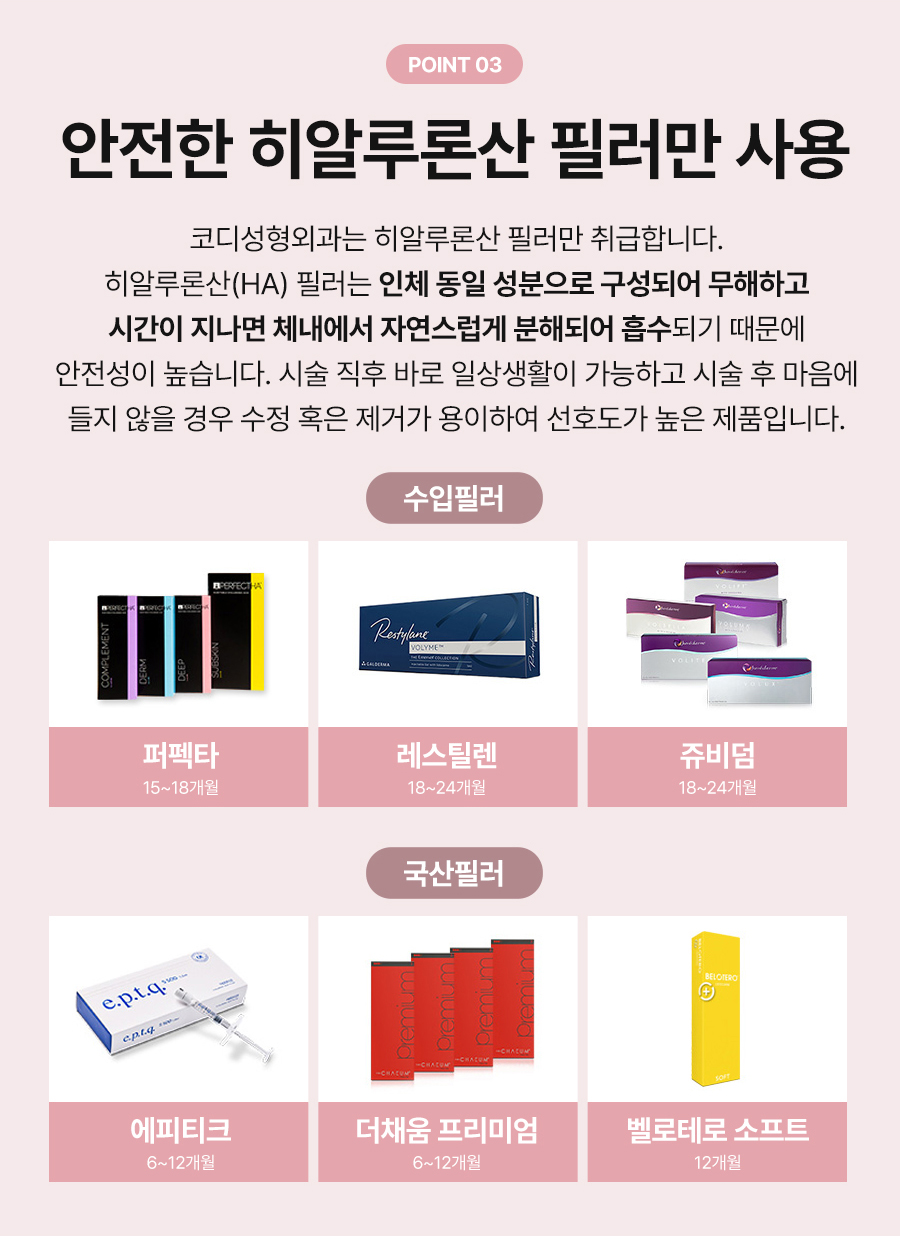
Filler type and injection depth are also key. The forehead has important blood vessels, and the skin is relatively tight. A clinic that understands which filler density to use and at what depth can help reduce the risk of visible lumps, irregularities, and vascular problems. They may use a combination of deeper injections for base volume and more superficial injections only where needed for fine contouring.
Finally, a trustworthy clinic offers clear consultation. They explain how much volume is likely needed, how many syringes that means, how long the result may last, and what kind of touch-ups might be necessary. They also talk honestly about possible swelling, bruising, and rare but serious risks.
Example: how a filler-focused clinic may be organized
Some clinics emphasize filler procedures by creating dedicated units—such as an eye surgery unit, a revision unit, and a facial filler unit—so that filler is a core service rather than an occasional add-on. If you see a clinic structured this way, review their published case examples and patient information, and verify organization and services via the clinic's official website or direct contact.
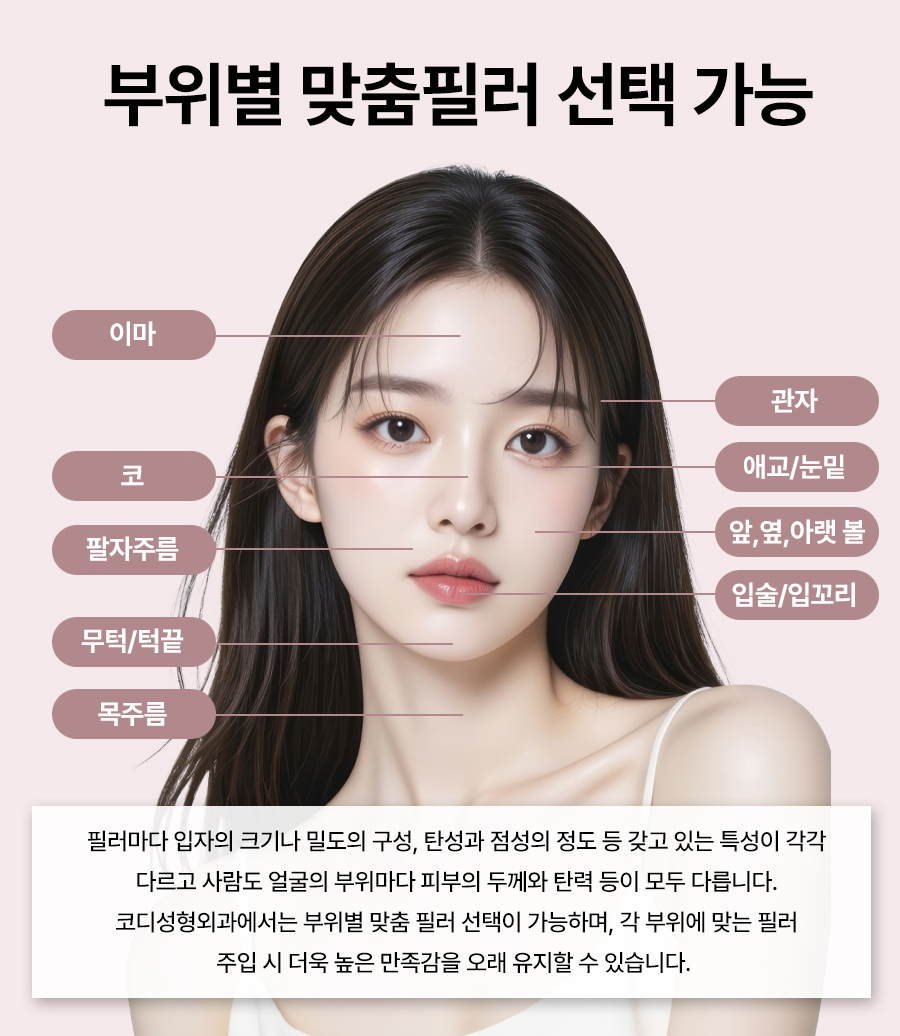
The clinic may offer an area-specific filler lineup: nose, forehead, front and side cheeks, lower cheeks, chin, under-eye area, smile lines, lips, and more. This segmented menu supports the concept of customized filler design for each facial area. For forehead filler, this means the doctor can also suggest small adjustments to nearby areas, such as the nose or chin, if that would improve the overall profile.
The clinic may report multiple board-certified plastic surgeons and access to anesthesiology or pain medicine specialists; confirm current staffing and credentials with the clinic. An anesthesia specialist, when available, typically handles sedation planning and intra-procedural monitoring, which some patients find reassuring—especially those who are anxious or traveling from abroad.
Because the clinic focuses on eye and filler procedures, the staff are used to dealing with delicate areas around the eyes and forehead. They are familiar with the anatomy, common concerns about asymmetry and lumps, and the importance of natural-looking results from the front and side.
Forehead filler process step by step
Although details vary by patient, most forehead filler treatments near Sinnonhyeon follow a similar process.
Consultation and design
First, you meet the doctor for consultation. They examine your forehead from the front and side, checking flatness, bony ridges, and any asymmetry. They also look at the relationship between your forehead, eyebrows, and nose.
You then discuss your desired style. Some people want a soft and feminine curve, others prefer a very natural and subtle change, and some like a slightly fuller look for a youthful profile. The doctor may show sample photos or diagrams to make sure you share the same image.
Based on this discussion, the doctor recommends a filler type and approximate volume. They may also suggest combining forehead filler with small adjustments to the nose or chin to balance the side view. For overseas patients, this is often planned in advance through online consultation, then confirmed in person.
Pre-procedure preparation
Before the procedure, the clinic checks your medical history. They ask about allergies, previous filler treatments, use of blood thinners, and any history of vascular problems or autoimmune disease. They may also ask about migraines or frequent headaches, because forehead injections can temporarily influence these sensations.
Standardized photos are taken from several angles, and sometimes 3D or profile analysis is used. This helps in planning and in comparing before and after.
Topical anesthetic cream is applied to the forehead, and in some cases, light sedation is offered. At clinics with an in-house anesthesiology specialist, this doctor manages the sedation plan and monitors your vital signs throughout the procedure.
Injection technique
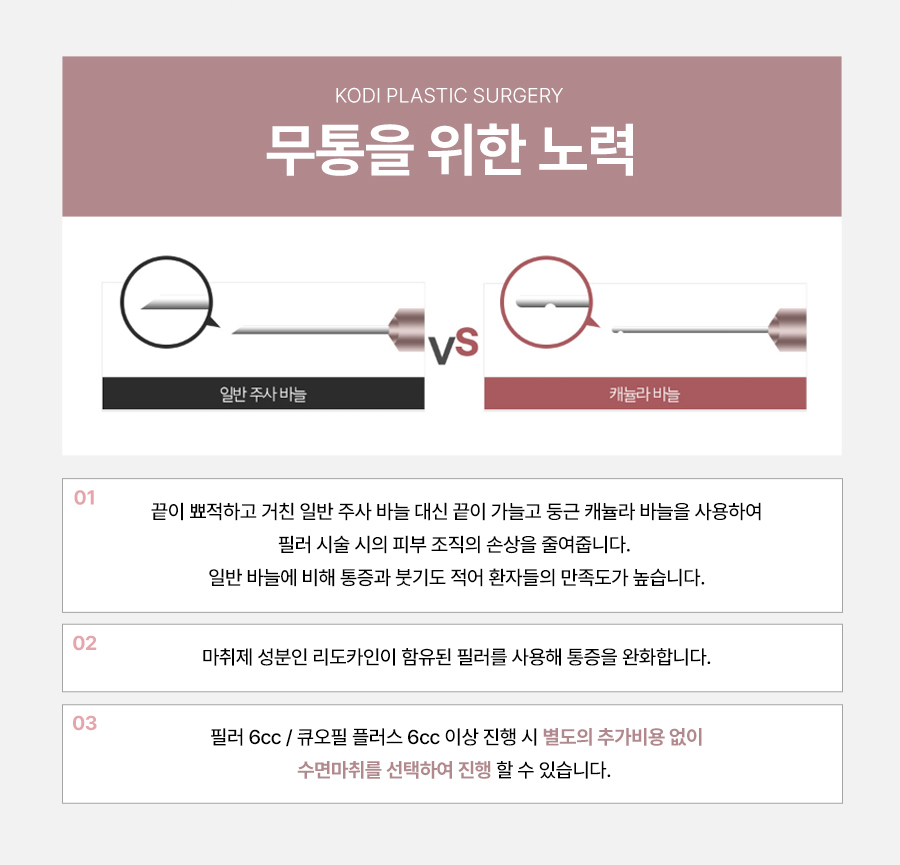
The doctor may use a cannula, a blunt-tipped instrument, or a fine needle, depending on your anatomy and the chosen technique. Cannulas can help reduce bruising and may lower the risk of injuring blood vessels in some patients. Needles may be used for more precise shaping in certain areas.

The filler is usually injected in layers. A deeper layer provides base volume and smooths out bony areas. A more superficial layer may be added only where needed to refine the curve. This layered approach helps reduce the chance of visible lumps or ridges.
During injection, the doctor and staff monitor your comfort and skin condition. They ask about any sharp or unusual pain, and they observe skin color. If anything looks abnormal, they can stop and evaluate immediately.
Immediate aftercare
Right after the procedure, cooling packs are often placed on the forehead to reduce swelling. The doctor checks the shape from different angles and may make small adjustments.
You receive instructions about what is normal and what is not. Mild swelling, slight unevenness, and tenderness are common in the first days and usually settle as the filler integrates with the tissue. However, severe pain, strong skin color changes (such as pale or bluish areas), or visual disturbance are warning signs and require urgent contact with the clinic.
You are usually advised to avoid pressing on the forehead, sleeping face down, or wearing tight hats for a few days. Saunas, very hot showers, alcohol, and intense exercise are often restricted for a short time to help minimize swelling and bruising.
Follow-up
Most clinics near Sinnonhyeon schedule a short-term follow-up visit. At this visit, the doctor checks symmetry and overall shape. If needed, a small touch-up can be performed.
The doctor should explain how long your filler is expected to last and when you might consider re-treatment. The longevity of hyaluronic acid fillers varies by product, injection depth, and individual metabolism; effects are commonly reported to last from several months to over a year. Ask your provider for product-specific clinical data and the expected duration for your treatment plan.
For overseas patients, some follow-up can be done through online photo reviews if you have already returned home. It is helpful to clarify this during your first consultation.
Safety, side effects, and how a prepared clinic manages them
Like any medical procedure, forehead filler has possible side effects and risks. Understanding them can help you choose a clinic that takes safety seriously.
Common minor side effects include temporary swelling, redness, bruising, and mild tenderness. Slight asymmetry is also common in the first days, as one side may be more swollen than the other. These usually improve as the swelling goes down.
More serious but rare risks include vascular occlusion (a blood vessel becoming blocked), skin necrosis, infection, and visual disturbance. The forehead and surrounding area have important blood vessels that connect to the eye region, so careful technique is essential.

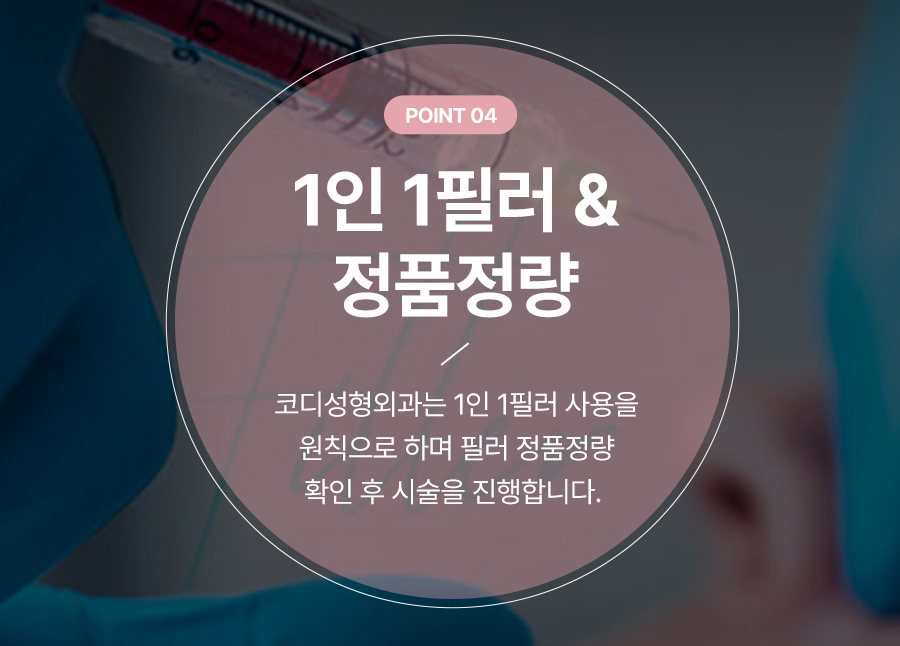
A well-prepared clinic has clear protocols for these situations. They keep emergency drugs, including hyaluronidase, ready to dissolve hyaluronic acid filler quickly if needed. They monitor the patient’s condition during and after injection, and they instruct patients clearly about warning signs.
Having an anesthesiology and pain medicine specialist in-house can add another layer of safety, especially for patients undergoing sedation. This specialist can respond quickly to any systemic reactions and manage blood pressure, breathing, and consciousness level.
In addition, a careful clinic often uses conservative volumes, especially for first-time patients. Instead of injecting a very large amount at once, they may recommend a moderate volume and then adjust at a later visit if more fullness is desired.
Checklist for choosing your forehead filler clinic near Sinnonhyeon
When comparing clinics around Sinnonhyeon Station, it helps to prepare a simple checklist. This can be especially useful if you are contacting clinics online from overseas.
Ask yourself these questions:
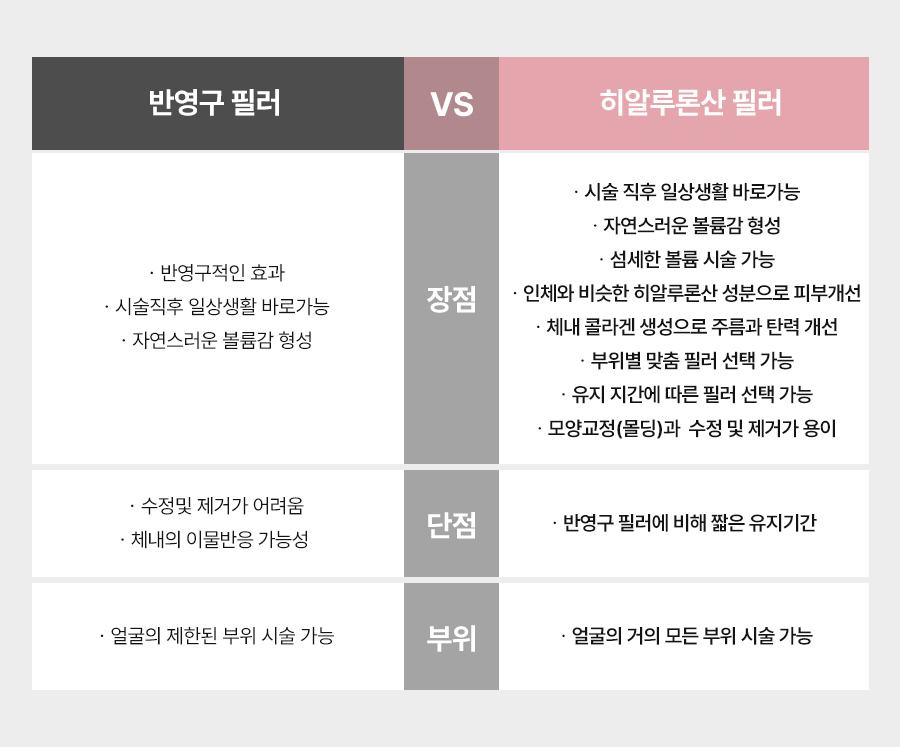
1. Is forehead filler a routine procedure there, or only an occasional service? Clinics that perform forehead filler regularly are more likely to have refined techniques and consistent protocols.
2. Do they offer multiple facial filler areas and show examples of forehead cases? A clinic with a structured filler lineup for nose, cheeks, chin, under-eye, and other areas is usually more experienced in three-dimensional facial design.
3. Are injections performed by board-certified plastic surgeons? This indicates formal training in anatomy and surgical principles, which is important in delicate areas like the forehead.
4. Is there an anesthesiology and pain medicine specialist in-house, or at least a clear anesthesia safety system? For patients who are nervous about pain or sedation, this can make a big difference.
5. Do they provide detailed consultation about design, volume, expected duration, and possible side effects, instead of focusing only on price? A good clinic helps you understand what to expect and encourages questions.
6. Are clinic hours and communication channels convenient for you? For people working around Sinnonhyeon, weekday daytime plus one late evening (for example, Thursday) and Saturday hours can make it easier to schedule. For overseas patients, check if they support communication through email or messaging apps, and whether they have English, Chinese, or Japanese language support.
Before contacting clinics, it can help to write down your questions. Examples include: how many forehead filler cases they perform per week, what type of filler they prefer for the forehead and why, how they manage emergencies, and what follow-up options exist for international patients.
Online consultation and pre-visit preparation for overseas patients
If you live abroad and plan to visit Seoul for forehead filler, online consultation is often the first step. Many clinics near Sinnonhyeon offer online forms or messaging channels where you can send photos and basic information.
To prepare, take clear photos of your face from the front, 45-degree angle, and full side profile under natural light. Avoid heavy makeup on the forehead. If you have had previous filler or fat grafting, inform the clinic and, if possible, share the date and type of product used.
Prepare a short medical history: allergies, chronic illnesses, medications, and any history of surgery or filler. Mention if you take blood thinners, have autoimmune conditions, or have experienced unusual reactions to injections in the past.
Ask about the recommended schedule: how many days you should stay in Korea, when the follow-up visit should be, and what to do if you notice issues after returning home. Clarify the expected downtime, so you can plan sightseeing or business meetings accordingly.
Expected Korea visit timeline for forehead filler
For most overseas patients, a short stay is enough for forehead filler, but it is wise to allow some buffer time.
Day 1: In-person consultation and possible procedure. You meet the doctor, confirm the design, and undergo the treatment if both sides agree. Some patients prefer to have consultation and procedure on the same day; others may schedule the procedure for the next day.
Days 2–3: Initial recovery. Mild swelling and possible bruising may appear. You can usually move around the city, but you may prefer light activities and avoiding very hot places.
Day 4–7: Shape stabilizing. Swelling gradually decreases, and the forehead contour becomes clearer. Many people feel comfortable attending meetings or taking photos by this time.
Day 7–10: Optional follow-up visit. If your schedule allows, a follow-up appointment can be booked before you leave Korea. The doctor checks the result and can make minor adjustments if needed.
If your stay is very short, discuss with the clinic how they handle follow-up for international patients. Some clinics can review photos sent later and advise you remotely.

Aftercare and long-term maintenance
After forehead filler, basic aftercare focuses on protecting the area and allowing the filler to settle.
For the first one to two days, avoid pressing or massaging the forehead unless your doctor specifically instructs you to. Sleep on your back if possible, and avoid sleeping face down or on your side with heavy pressure on the forehead.
Avoid saunas, hot baths, and intense exercise for a few days, as heat and increased blood flow can worsen swelling or bruising. Alcohol is often limited for a short period for the same reason.
You can usually wash your face gently the same day or the next day, following the clinic’s instructions. Makeup can often be applied after 24 hours, avoiding strong pressure on the injection points.
In the long term, the filler gradually breaks down. Many people schedule maintenance treatments every 9 to 18 months, depending on how quickly their body metabolizes the product and how full they want the forehead to look. Some patients choose to switch to fat grafting later if they want a more long-lasting volumizing option.
FAQ about forehead filler near Sinnonhyeon
How long does forehead filler last?
Over time, the filler gradually breaks down and is absorbed by the body, so the effect slowly softens rather than disappearing overnight.
When is fat grafting better than filler for the forehead?
Fat grafting may be considered if you want a more permanent volumizing option, need a large volume change, or prefer to use your own tissue instead of synthetic filler. It is a surgical procedure, usually requiring more downtime and sometimes multiple sessions to achieve the desired volume. For first-time patients who want to test how a fuller forehead looks, or for those who prefer a less invasive approach, hyaluronic acid filler is often chosen first.
How painful is forehead filler, and what anesthesia options are available?
Most people describe forehead filler as mildly to moderately uncomfortable rather than very painful. Clinics usually apply topical anesthetic cream, and many fillers also contain a local anesthetic inside the product. For patients who are very sensitive or anxious, light sedation can be offered at clinics with an in-house anesthesiology and pain medicine specialist. During consultation, you can discuss your pain tolerance and choose the most suitable anesthesia plan.
How much downtime should I expect, and when can I return to work or apply makeup?
Downtime is usually short. Many patients return to office work the next day, especially if they are comfortable with mild swelling or small bruises. Visible swelling often improves within a few days. Makeup is typically allowed after 24 hours, avoiding strong pressure on the injection sites. If you have important events or photo sessions, it is safer to schedule the procedure at least one to two weeks in advance.
Can previous forehead filler be corrected or dissolved?
If your previous forehead filler was hyaluronic acid based, it can often be adjusted or dissolved using an enzyme called hyaluronidase. A careful clinic will first examine your forehead, review your filler history if available, and then decide whether partial dissolution, complete dissolution, or additional shaping with new filler is best. Non-hyaluronic acid fillers are more difficult to remove, so it is important to inform the doctor about the exact product used if you know it.
Soft call to action for online consultation
If you are considering forehead filler near Sinnonhyeon and want a clinic that treats filler as a core service rather than a side option, it can be helpful to start with an online consultation. By sharing your photos, medical history, and expectations in advance, you allow the medical team to propose a realistic plan and visit schedule.
Look for a clinic on Gangnam-daero with experienced plastic surgeons, a structured filler lineup, and, when possible, an in-house anesthesiology and pain medicine specialist. With careful design, appropriate filler selection, and a strong safety system, it may be possible to achieve a smoother, more harmonious forehead line in a short visit to Seoul.
Before making any decision, remember that individual results and suitability vary. A face-to-face consultation with qualified medical staff is essential to confirm whether forehead filler is right for you and to design a plan that matches your features and lifestyle.




- 공유 링크 만들기
- X
- 이메일
- 기타 앱


댓글
댓글 쓰기