Seocho thread lift price guide for overseas patients
- 공유 링크 만들기
- X
- 이메일
- 기타 앱

Direct answer: Seocho thread lift price overview
vering the midface and jawline is in the middle range. More complex plans using a higher number of threads, or combining lower face and neck lifting, move into a higher price range. The exact figure depends on the thread material and brand, how many threads are used, which areas are treated, and the experience and qualifications of the medical team. You can only receive a precise quote after an in-person consultation and facial analysis.
This guide explains what affects thread lift pricing in Seocho, how to compare clinics beyond just the lowest fee, and how an overseas patient can plan a safe and efficient visit to Seoul.
What is a non-incisional thread lift
A facial thread lift is a minimally invasive anti-aging procedure that uses dissolvable threads placed under the skin to gently lift sagging tissues. Instead of long incisions, the doctor makes small entry points, usually around the hairline or near the ears, and passes the threads under the skin along planned lifting vectors.
The threads can have small barbs, cogs, or cones that anchor into the tissue. Once they are positioned and tightened, they provide an immediate mechanical lifting effect. Over time, the body forms collagen around the threads, which can help with gradual tightening and improved skin firmness.
Thread lifting is usually done under local anesthesia, sometimes with light sedation for comfort. It is often chosen by people who want visible lifting of the jawline, cheeks, or midface but are not ready for a full surgical facelift.

Main treatment areas for thread lifting
In Seocho clinics, non-incisional thread lifting is commonly used for:
Nasolabial folds: The lines from the sides of the nose to the corners of the mouth.
Marionette lines: The lines from the mouth corners down toward the chin.
Jowls and jawline contour: To define the jawline and reduce early sagging.
Midface and cheeks: To lift flattened cheeks and restore a more youthful contour.
Sometimes neck: To improve mild neck laxity when combined with lower face lifting.
The doctor designs the thread directions to support these areas, often using multiple vectors so the lift looks natural rather than pulled in one straight direction.
Typical Seocho thread lift price ranges
Because each clinic sets its own pricing, the numbers below are only general patterns you may see when you start contacting clinics in the Seocho and Gangnam-daero area. Use them as a reference to understand why quotes differ, not as fixed market prices.
Basic partial thread lift
This level usually targets one small area with a limited number of threads. Examples include a light jawline correction, lifting one side that is more saggy, or focusing on the midface only.
Entry-level pricing often includes:
Fewer lifting threads.
Treatment of a limited zone such as only jawline or only midface.
Local anesthesia without deep sedation.
Standard follow-up visits.
Standard full face thread lift
A standard plan in Seocho typically includes lifting the midface and jawline together, sometimes with some support for the nasolabial folds and marionette lines.
Mid-range pricing usually reflects:
More lifting threads and more complex vector design.
Treatment of multiple zones such as both midface and lower face.
More detailed pre-treatment analysis and planning.
Possibility of combining with small amounts of filler or botulinum toxin if discussed in advance.
High-density or face plus neck thread lift
Higher range pricing is often quoted when:
The plan includes both lower face and neck.
A high number of threads or multi-layer technique is used.
The patient has heavier tissue that needs more support.
The procedure is performed by a senior surgeon with extensive experience.
Sedation with continuous monitoring by an anesthesiology specialist is included.
Key factors that influence thread lift cost in Seocho
Thread type and brand
Different thread materials and designs have different costs. Common options include:
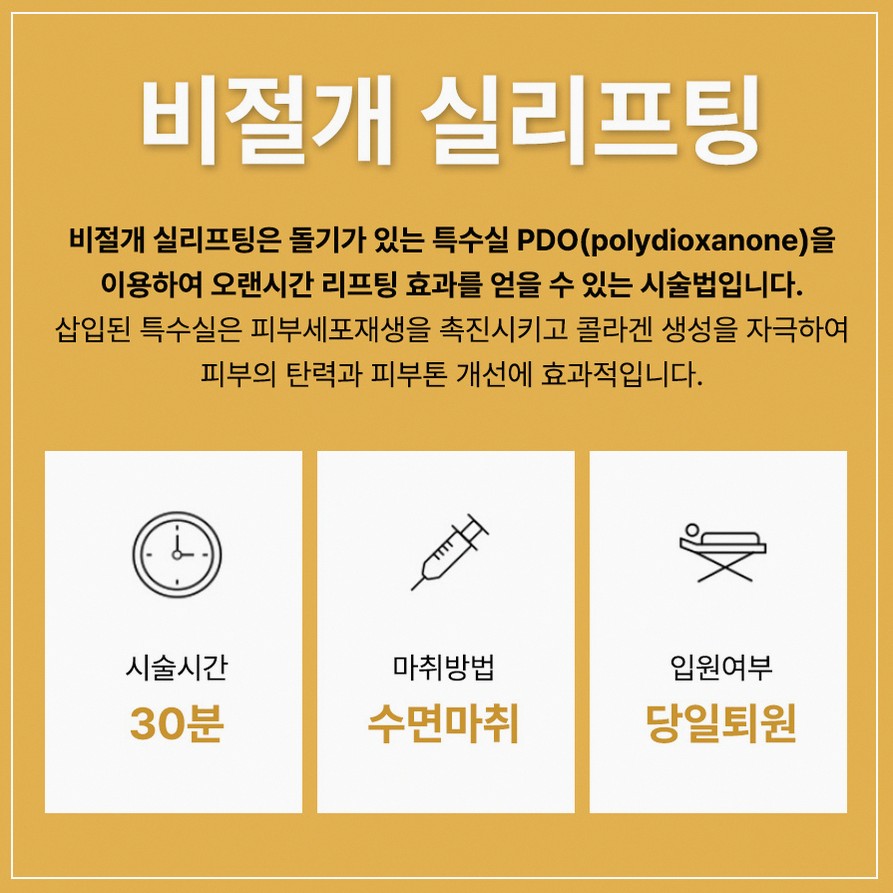
PDO threads: Widely used, with barbed or cog designs for lifting and mono threads for collagen stimulation.
PLLA or PLCL threads: Often marketed as longer-lasting, usually more expensive per thread.
Cone or molded threads: Designed for stronger anchoring, often used for heavier lifting.
Premium, well-known brands that are approved as medical devices generally cost more than generic products. When comparing quotes, always ask which material and brand will be used and whether it is an approved device.
Number of threads and lifting design
The more threads used, the more time and material are required, which raises the price. A plan that uses several vectors and layers to achieve natural support will usually cost more than a simple straight-line lift with only a few threads.
Ask clinics to explain how many lifting threads are included in the quoted price and whether additional threads, if needed on the day, will incur extra charges.
Treatment area
Prices differ depending on whether you treat:
Only jawline.
Midface and jawline.
Full face.
Face plus neck.
A quote that looks high at first may actually cover more zones and more threads than a cheaper option, so make sure you compare what is included, not just the total amount.
Combination with other procedures
Some patients benefit from combining thread lifting with other anti-aging options, such as:
Filler for volume loss in the cheeks or under the eyes.
Botulinum toxin for dynamic wrinkles.
Fat grafting for deeper volume restoration.
Mini lifting or full facelift for more advanced sagging.
Combined plans naturally cost more than thread lifting alone, but they may give a more balanced result. In Seocho, some clinics offer structured anti-aging programs where thread lifting is just one part of a staged plan.
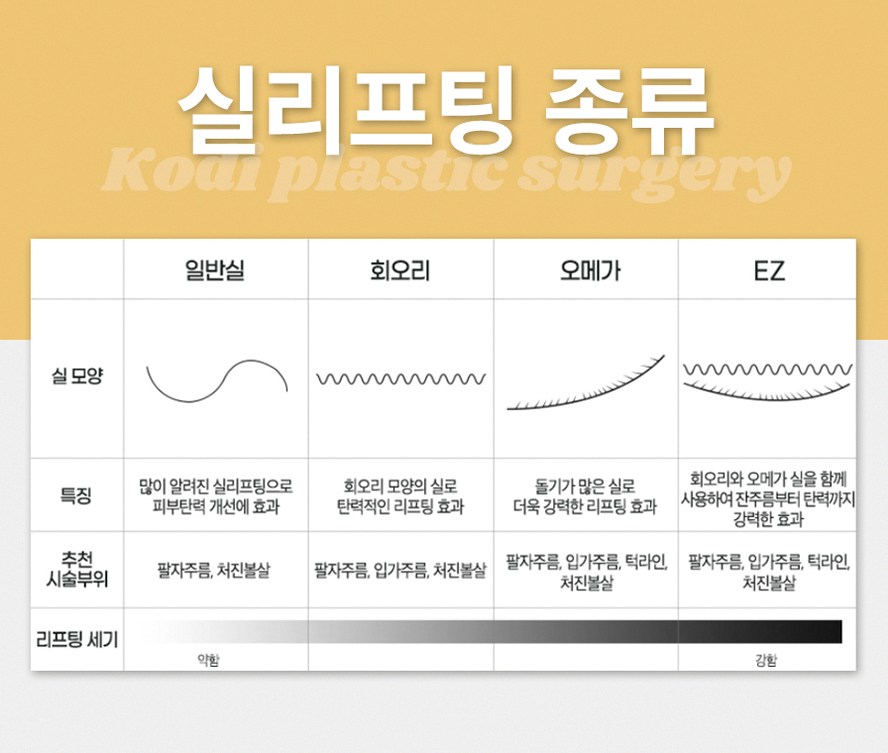
Experience and qualifications of the medical team
Prices often reflect the experience level of the doctor. A board-certified plastic surgeon with a strong background in facial anatomy may charge more than a less experienced practitioner, but can also offer more tailored vector design and safer handling of tissue.
Clinic location and facilities
Clinics located on higher floors of modern buildings along Gangnam-daero in Seocho often invest in:
Dedicated operating rooms.
Advanced monitoring equipment.
Comfortable recovery areas.
These facility costs are reflected in the procedure price. However, they also contribute to safety and comfort, particularly for overseas patients who may be traveling alone.
How to compare Seocho thread lift prices wisely
Avoid choosing only by the lowest price
Discount advertisements can be tempting, but very low prices sometimes mean:
Use of cheaper, less documented thread brands.
Limited number of threads included.
Short consultation times and less personalized planning.
Less robust anesthesia and monitoring systems.
A thread lift is still a medical procedure. Saving a small amount upfront is not worth it if safety or long-term satisfaction is compromised.
Checklist for comparing clinics
When you contact Seocho clinics about thread lift pricing, consider asking these questions:
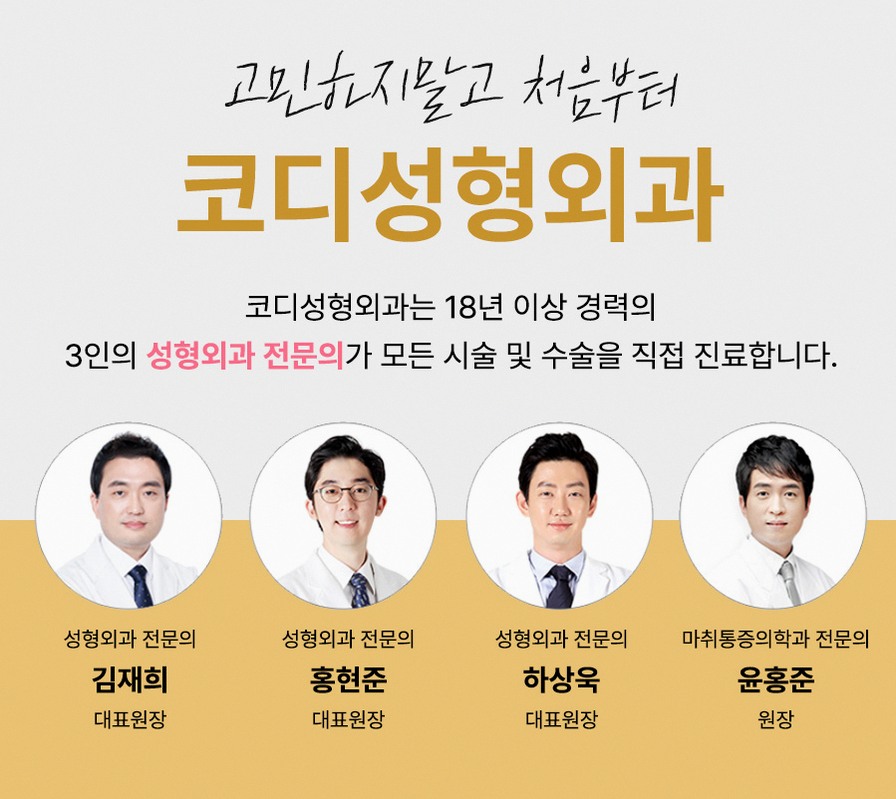
Who will perform the procedure? Confirm whether a board-certified plastic surgeon will personally carry out your thread lift.
What thread material and brand will be used? Ask if the threads are approved medical devices and whether the clinic can show the packaging on the day of treatment.
How many threads are included in the price? Clarify the number of lifting threads and which facial zones are covered.
Is there a detailed pre-treatment assessment? Ask if the doctor will evaluate skin thickness, fat volume, degree of sagging, and facial asymmetry before finalizing the plan.
What type of anesthesia is used, and who monitors it? If sedation is offered, check whether an anesthesiology specialist will monitor your vital signs.
What follow-up care is included? Confirm the schedule of post-procedure visits, how bruising and swelling are managed, and what happens if you need a touch-up.
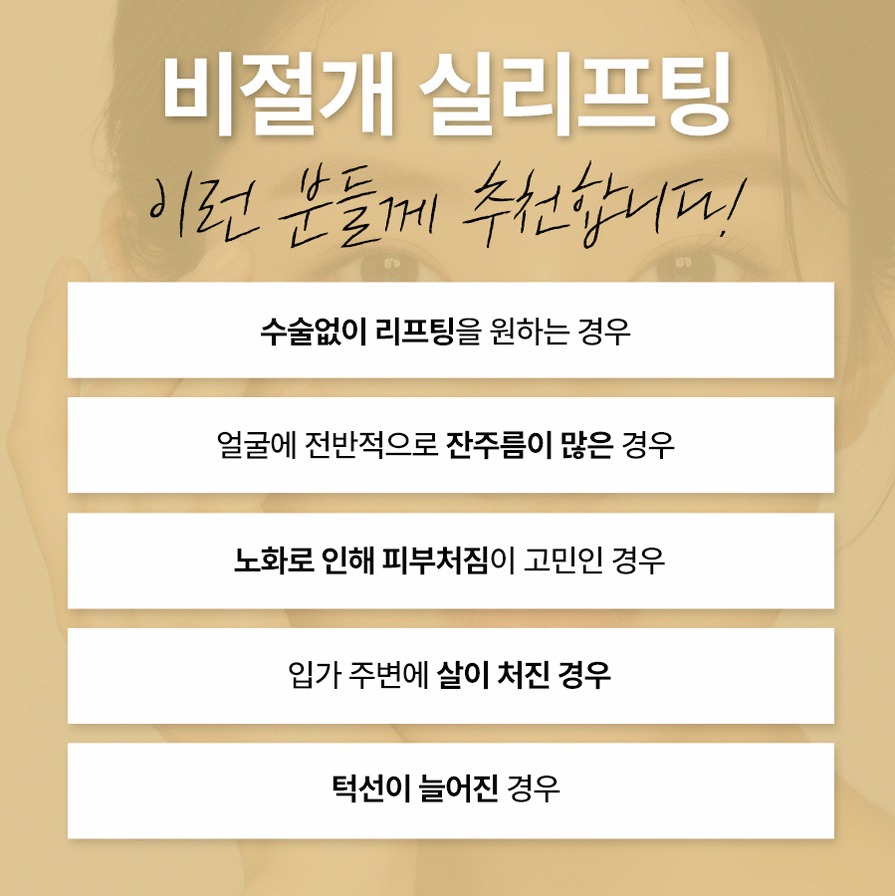
These questions help you compare real value rather than just headline prices.
Who might consider a thread lift in Seocho
Good candidates
You may be a suitable candidate for non-incisional thread lifting if you have:
Mild to moderate facial sagging.
Early jowls or a blurred jawline.
Flattening of the midface or deepening nasolabial folds.
It is also appropriate for people who want visible lifting but are not ready for a full surgical facelift, and who understand that results are more subtle and shorter-lasting than surgery.
Less suitable candidates
Thread lifting may not be ideal if you have:
Very heavy sagging or very thick skin, where a surgical facelift may give more predictable results.
Unrealistic expectations of a dramatic, permanent change from threads alone.
Medical conditions or lifestyle factors that prevent you from following post-procedure care instructions.
During consultation, be open about your goals and medical history so the doctor can advise whether thread lifting, another non-surgical option, or surgery would be more appropriate.
Typical procedure flow at a Seocho clinic
Consultation and planning
Your visit usually begins with:
Medical history review, including medications, allergies, and any previous facial procedures.
Assessment of skin elasticity, fat volume, and degree of sagging.
Discussion of your main concerns, such as jawline, cheeks, or neck.
Explanation of what thread lifting can and cannot achieve compared with surgical facelift.
The doctor then suggests a personalized plan, including:
Choice of thread type and material.
Number of threads and lifting vectors.
Whether to combine with fillers or other treatments.
Expected duration of effect and maintenance schedule.
Pre-procedure preparation
Before the procedure, the clinic typically:
Takes standardized photographs for before-and-after comparison.
Explains the anesthesia method, such as local anesthesia alone or with light sedation.
Reviews possible side effects, downtime, and aftercare instructions.
Obtains your informed consent.
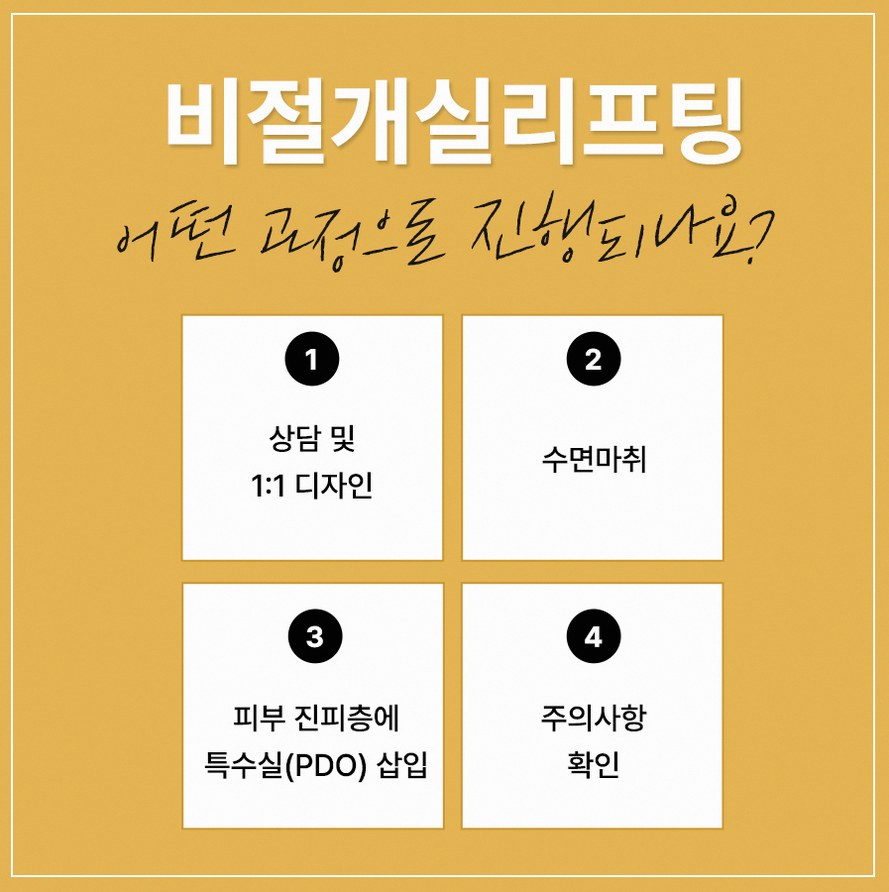
Procedure day
On the day of your thread lift in Seocho:
Your face is cleansed, and the doctor marks lifting vectors on your skin.
Local anesthesia is injected at entry points and along the planned paths.
If sedation is chosen, an anesthesiology specialist may monitor your vital signs throughout.
The doctor inserts threads through small entry points using fine cannulas or needles, positions them, and adjusts tension to achieve a symmetrical lift.
Entry points are covered with small dressings, and you receive immediate post-procedure instructions.
Most patients can leave the clinic the same day.
Recovery and aftercare
Typical recovery
After a thread lift, it is common to experience:
Mild to moderate swelling.
Bruising around entry points or along thread paths.
Tenderness or tightness when moving the face.
Slight asymmetry during the early healing phase.
These usually improve over several days to one or two weeks, though minor tightness can last longer as the tissues adapt.
Post-procedure instructions
To protect your threads and support healing, clinics often advise:
Avoid strong facial movements and exaggerated expressions for a set period.
Do not open your mouth very wide, for example during large bites or dental procedures, in the early days.
Avoid heavy exercise, saunas, and facial massage for a few weeks.
Sleep on your back with your head slightly elevated in the first days to reduce swelling.
Follow-up visits are scheduled to check symmetry, healing, and your satisfaction. If minor adjustments or additional treatments are needed, they are usually discussed at these visits.
Risks, side effects, and safety points
Common temporary effects
Short-term effects after thread lifting may include:
Swelling and bruising.
Tenderness along the thread paths.
Feeling of tightness or pulling.
Mild unevenness or dimpling that usually smooths as tissues settle.
Possible complications
Less common but possible issues include:
Thread visibility or being able to feel the thread under thin skin.
Persistent dimpling or irregularity.
Infection at entry points.
Thread migration or breakage.
Prolonged pain or unsatisfactory lifting effect.
Safety recommendations
To reduce risks, overseas patients should:
Choose a clinic with board-certified plastic surgeons and clear responsibility for anesthesia and monitoring.
Confirm that approved, traceable thread products are used.
Ask how complications are handled, whether revision or removal is possible, and what additional costs might apply.
Plan enough time in Seoul for at least one or two follow-up checks before returning home.
Online consultation and pre-visit preparation for overseas patients
Before you book flights to Seoul, it is helpful to arrange an online or remote consultation with your chosen Seocho clinic.
What to prepare for online consultation
To make the most of your remote consultation:
Prepare clear photos of your face from the front, 45-degree angles, and side views in good lighting.
List your main concerns in order of priority, such as jawline, midface, or neck.
Write down your medical history, medications, allergies, and any previous facial procedures.
Collect reference images that show the type of subtle improvement you hope for, not unrealistic celebrity photos.
Questions to ask before you travel
Consider asking:
Is thread lifting alone suitable for my degree of sagging, or should I consider other options?
Approximately how many threads and which areas are likely to be treated?
What is the estimated price range for my case, including anesthesia and follow-up?
How many days should I stay in Seoul for the procedure and follow-up visits?
The clinic can then suggest a tentative plan and a visit schedule that fits your travel dates.
Expected Korea visit timeline for thread lifting in Seocho
Many overseas patients follow a schedule similar to this:
Day 1: In-person consultation, facial analysis, and final treatment planning. If both you and the doctor agree, the procedure may be scheduled for the same day or the next day.
Day 1 or 2: Thread lift procedure at the clinic. You rest at your accommodation afterward.
Day 3 to 5: First follow-up visit to check swelling, symmetry, and early healing.
Day 7 to 10: Optional second follow-up if your stay allows, to confirm that the threads are settling well.
If your schedule is tight, discuss with the clinic which minimum follow-up visits are essential and how you can stay in contact once you return home.
FAQ about Seocho thread lift price and treatment
What is included in a typical Seocho thread lift price quote
Most quotes include the cost of the threads, the doctor’s fee, use of the procedure room, basic local anesthesia, and standard follow-up visits. Some clinics also include simple medications such as pain relief and antibiotics. Sedation, additional threads beyond the planned number, or combination treatments like fillers may be charged separately, so ask for a written breakdown.
Why do thread lift prices differ so much between Seocho clinics
Differences usually come from the thread brand and material, the number of threads used, the areas treated, and the experience level of the surgeon. Clinics with board-certified plastic surgeons, a dedicated anesthesiology specialist, and well-equipped facilities along Gangnam-daero may have higher baseline costs. However, they may also provide more detailed planning, safer anesthesia, and structured aftercare.
How long do thread lift results last, and will I need to pay again for maintenance
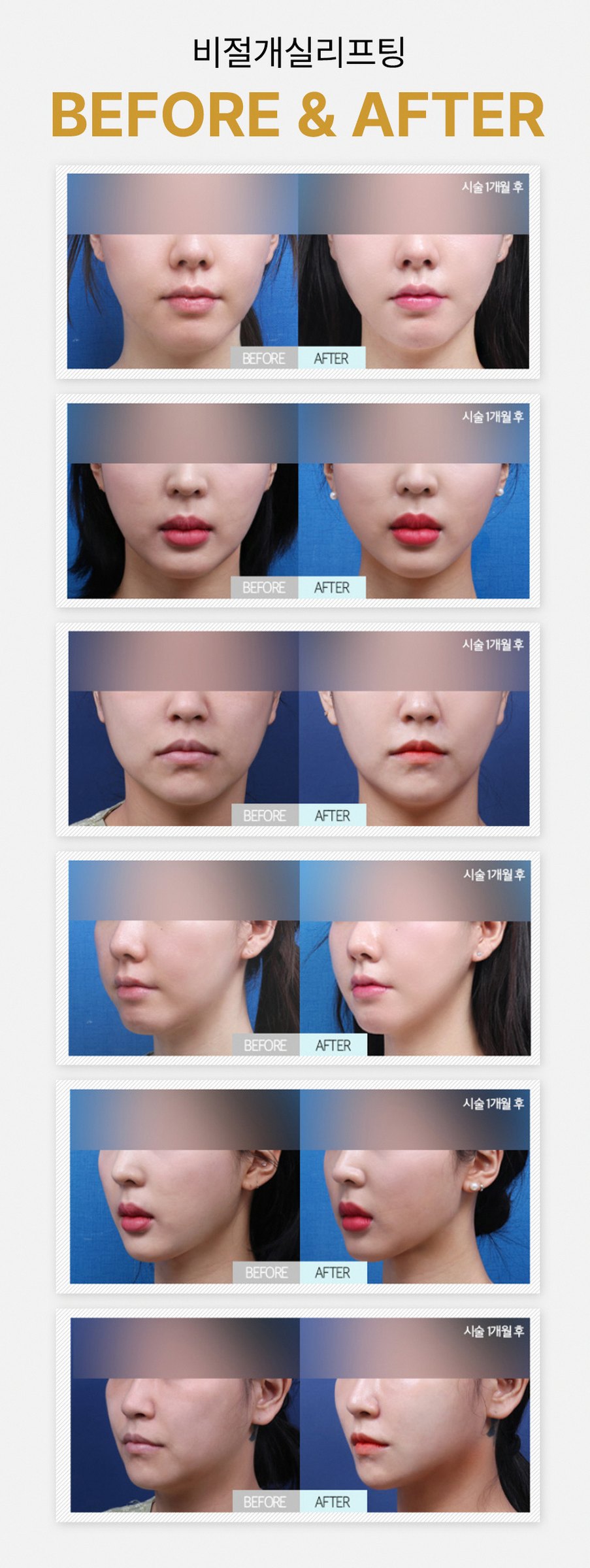
Thread lift effects are not permanent. Clinics report variable durations for the main lifting effect depending on age, skin quality, lifestyle, and thread type; ask your clinic for their typical range. As the threads dissolve and natural aging continues, some people choose maintenance treatments. When planning your budget, consider that you may want repeat or complementary treatments in the future.
Is it safe to have a thread lift in Seocho as an overseas patient
Seocho District, especially around Gangnam-daero, has many clinics experienced with international patients. Safety depends on choosing a clinic with qualified surgeons, approved thread materials, clear anesthesia protocols, and a reliable follow-up system. Make sure you allow enough time in Seoul for at least one or two follow-up visits and keep communication open with the clinic after you return home.
Soft call to action
If you are considering a non-incisional thread lift in Seocho and want a realistic price estimate, the most reliable next step is a direct consultation with a qualified clinic. An online pre-consultation using photos can help you understand whether you are a good candidate, what type of threads and how many may be needed, and what price range to expect for your individual case.
Rather than focusing only on the lowest Seocho thread lift price, look for a clinic that offers careful facial analysis, clear explanations, and a structured plan for anesthesia and aftercare. This approach will help you make the most of your visit to Seoul and choose a treatment that fits both your aesthetic goals and your safety expectations.
- 공유 링크 만들기
- X
- 이메일
- 기타 앱


댓글
댓글 쓰기