How to Choose a Reliable Gangnam Clinic
- 공유 링크 만들기
- X
- 이메일
- 기타 앱
Direct answer for Yeoksam searchers
If you are searching around Yeoksam for a clinic that is good at treating under-eye hollows with filler, focus on clinics that specialize in eye-area procedures and facial fillers, rather than general beauty clinics. In the Yeoksam–Gangnam corridor, you will find many options, but for the delicate tear-trough and aegyo-sal area, it is safer to choose a place that offers area-specific filler planning, uses softer products suitable for the under-eye, and provides clear explanations of alternatives such as surgery or fat grafting. KODI PLASTIC SURGERY, located on Gangnam-daero in Seocho-gu close to Yeoksam and Gangnam stations, is one example of a clinic that focuses on eye plastic surgery and facial filler procedures with a structured, area-based filler system.
What under-eye hollow filler actually does
Under-eye hollow filler is a non-surgical procedure designed to restore lost volume in the groove under the eyes, often called the tear trough or under-eye hollow. As we age or lose weight, the fat and soft tissue in this area can thin out, creating a shadow that makes the face look tired, sunken, or older than it is. By placing a small amount of filler in carefully chosen points, the contour can be smoothed so that light reflects more evenly and the dark shadow is reduced.
The goal is not to “inflate” the area, but to subtly lift the deepest part of the hollow. When done conservatively with the right product and depth, the result can soften a fatigued look and blend the line between the lower eyelid and the upper cheek.
Under-eye filler vs aegyo-sal filler vs surgery
It is helpful to understand the difference between a few procedures that are often confused.
Under-eye hollow filler targets the groove or depression that runs from the inner corner of the eye along the lower eyelid toward the cheek. It is mainly for volume loss and shadowing. The filler is usually placed a bit deeper to support the tissue and create a smoother transition.
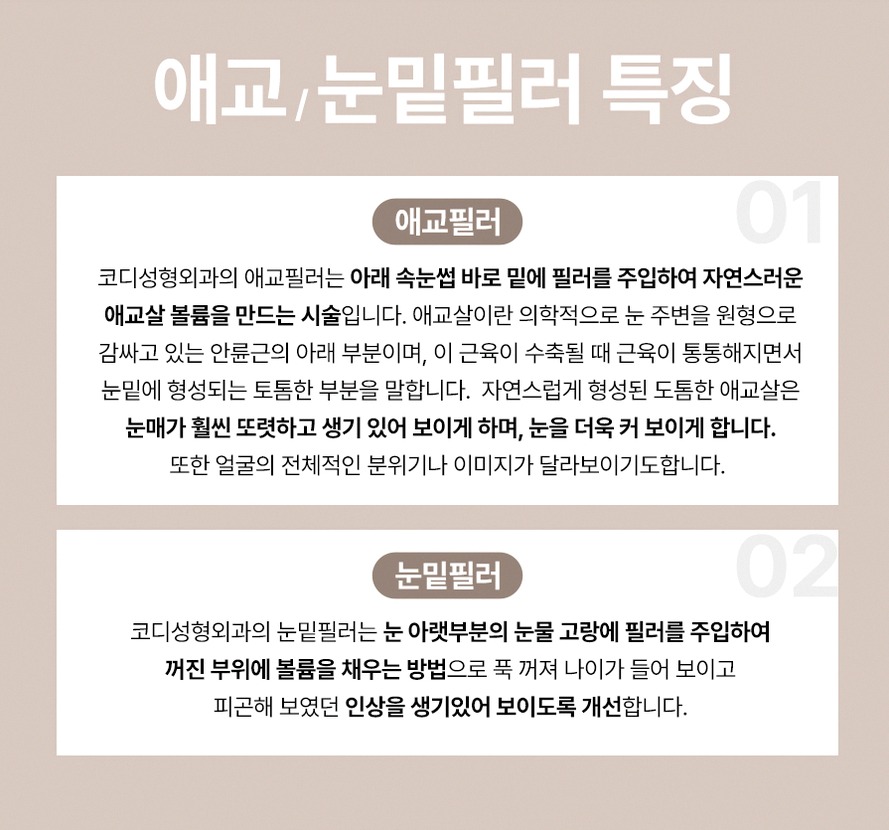
Aegyo-sal filler focuses on the small roll of tissue just under the lower lash line. This roll can make the eyes look softer or more youthful when it is gently defined. Aegyo-sal filler is placed much closer to the skin surface and in a very narrow band, so it requires a different technique and product choice from tear-trough filler.
Surgical options, such as under-eye fat repositioning or lower blepharoplasty, are different again. These are used when there is significant protruding fat (under-eye bags), loose skin, or more advanced aging changes. Surgery can move or remove fat and tighten skin, while filler cannot. In some cases, a surgeon may recommend surgery instead of filler if the bags are large or the skin is very lax.
In the context of this guide, the focus is on non-surgical solutions: under-eye hollow filler and, when appropriate, aegyo-sal filler as part of a tailored plan.
Why choosing a specialized clinic in the Yeoksam–Gangnam area matters
The Yeoksam–Gangnam area is known for having many aesthetic and beauty clinics, from quick walk-in injection shops to more specialized medical centers. This variety is convenient, but it also means you need to be selective, especially for the under-eye area.
The skin under the eyes is thin and delicate, and important blood vessels and ligaments run through this region. If filler is placed too superficially or in the wrong layer, it can lead to visible lumps, prolonged swelling, or a bluish tint called the Tyndall effect. Overfilling can also make the under-eye look puffy instead of refreshed.
For these reasons, experience and technique are more important than price or speed. A specialized clinic will typically:
Have a clear focus on eye-related procedures and facial fillers, rather than offering under-eye filler as a casual add-on.
Use different filler types and protocols for each facial area, instead of one product and one pattern for the whole face.
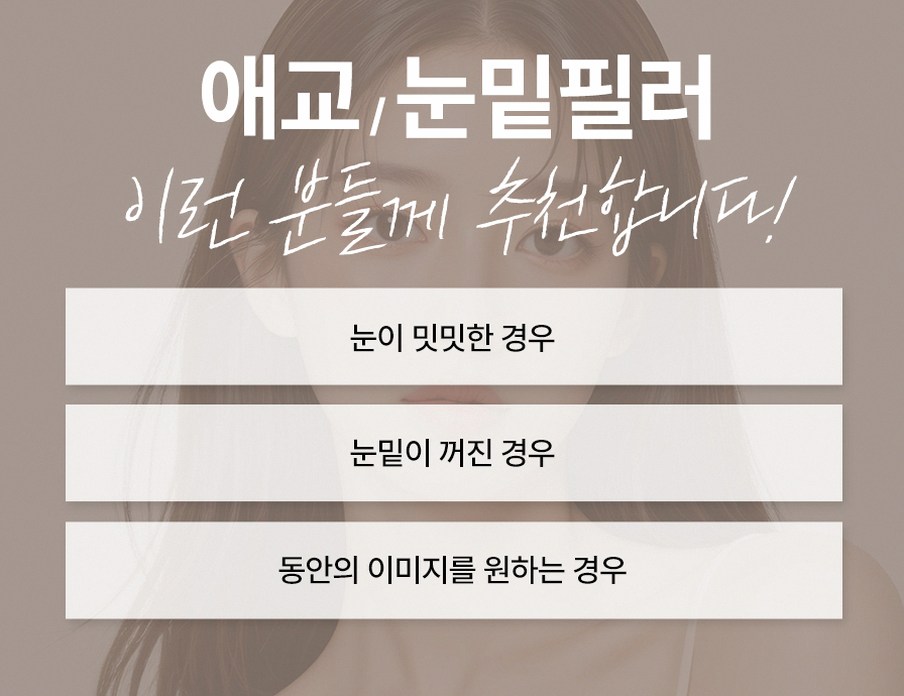
Carry out a detailed assessment of your under-eye condition, including skin thickness, degree of hollowness, presence of under-eye fat, and pigmentation.
Explain when filler is appropriate and when other options, such as under-eye fat repositioning, lower blepharoplasty, or fat grafting, may be more suitable.
How to pick a good under-eye filler clinic near Yeoksam
When comparing clinics in the Yeoksam–Gangnam corridor, it can help to prepare a short checklist and some questions in advance.
First, look at the clinic’s main focus. Does it highlight eye surgery and facial fillers as key specialties, or is it mainly promoting unrelated treatments with filler listed as a side service? A clinic that invests in dedicated eye and filler centers is more likely to have structured protocols for the under-eye area.
Second, check whether the clinic describes area-specific filler planning. For example, some clinics clearly separate their filler services by nose, forehead, cheeks, chin, under-eye/aegyo-sal, nasolabial folds, and lips. This suggests that they adapt product choice and technique to each region, which is particularly important under the eyes.

Third, pay attention to how they describe consultation. A thorough clinic will mention assessment of volume loss versus protruding fat, evaluation of pigmentation, and discussion of non-filler options when needed. If the messaging focuses only on speed, discounts, or instant effects, it may not reflect the level of caution you want for this area.
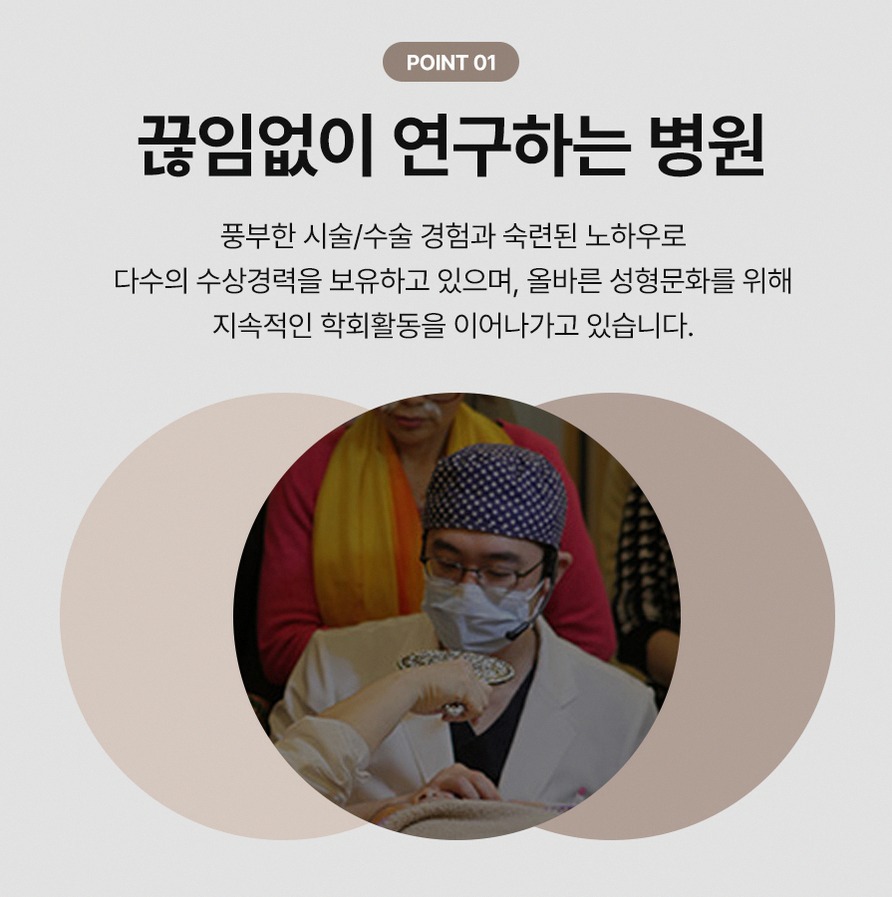
Finally, consider safety infrastructure. Having plastic surgery specialists and an anesthesiology and pain medicine specialist on staff, as at KODI PLASTIC SURGERY, can be reassuring. Even though under-eye filler is minimally invasive, access to proper monitoring and pain control, as well as emergency protocols, adds a layer of safety.
Area-specific filler planning at a dedicated eye and filler clinic
Some clinics in the Gangnam-daero area organize their filler services into a dedicated facial filler center, with separate planning for nose, forehead, front and side cheeks, lower cheeks, chin, under-eye/aegyo-sal, nasolabial folds, and lips or mouth corners. This area-based approach is particularly useful for under-eye hollows.
For the tear-trough and aegyo-sal region, the ideal filler is usually softer and more flexible than products used for structural areas like the nose or chin. The injection depth and pattern also differ: deeper placement along the bone may be used to support a hollow, while more superficial micro-droplets can refine fine lines or the aegyo-sal roll.
At a clinic that focuses on eye plastic surgery and filler procedures, the medical team can design a plan that considers how your under-eye area interacts with your cheeks, nose, and midface. Sometimes a very small amount of filler in the upper cheek, combined with conservative under-eye filler, creates a more natural result than filling the hollow alone.
The presence of a full-time anesthesiology and pain medicine specialist can also support these minimally invasive procedures. This specialist can help tailor anesthesia methods, monitor patients who are anxious or sensitive, and ensure that protocols are in place for rare but serious complications.
Who may consider under-eye hollow filler
Under-eye hollow filler can be an option for a range of patients, including international visitors to Korea.
You may be a good candidate if you have mild to moderate hollowness under the eyes that creates a shadow or tired appearance, especially when you are not wearing makeup. If your main concern is the contour and depth of the groove rather than loose skin or large bags, filler may help.
It is also suitable for people who want a non-surgical approach with relatively quick recovery. Many patients can return to work or sightseeing within a day or two, depending on individual swelling and bruising.
However, under-eye filler is not ideal for everyone. If you have very pronounced under-eye bags caused by protruding fat, or significant skin laxity, surgical options such as under-eye fat repositioning or lower blepharoplasty might provide a more appropriate solution. Likewise, if your dark circles are mainly due to pigmentation in the skin rather than shadow from a hollow, treatments targeting pigment may be needed.

People with unrealistic expectations of completely removing dark circles, or those who expect the result to be identical to a heavily edited photo, should discuss their goals carefully with the surgeon.
Online consultation and pre-visit preparation for overseas patients
If you are planning to travel to Seoul for under-eye filler, an online consultation before your trip can save time and help set realistic expectations.
Before contacting the clinic, prepare clear photos of your face in natural light: front view, 45-degree angles, and side views, both relaxed and with a gentle smile. Avoid heavy under-eye makeup so the medical team can see the true contour and pigmentation.
When you send an inquiry, it can help to include:
Your main concerns, such as “sunken under-eye area,” “tired look,” or “fine lines under the eyes.”
Any previous filler, fat grafting, or surgery in the under-eye or cheek area, including when and where it was done.
Relevant medical history, such as bleeding disorders, allergies to filler products, or previous adverse reactions.
Your travel dates and how many days you will stay in Korea.
During the online consultation, ask specific questions rather than only requesting a quote. For example, you might ask whether your case seems more related to volume loss or to fat bags, whether filler is likely to be sufficient, and what the expected downtime would be in your situation.
Expected Korea visit timeline for under-eye filler
For many overseas patients, under-eye hollow filler can be scheduled within a short stay in Seoul, provided that planning is done in advance.
On day 1, you can have an in-person consultation at the clinic, where the surgeon will examine your under-eye area directly. They may confirm or adjust the plan that was discussed online, and in some cases suggest combining under-eye filler with aegyo-sal filler or a small amount of cheek filler for better balance.
Often, the procedure can be performed on the same day as the consultation, if both you and the medical team agree. The actual injection time is usually short, but you should allow extra time for cleansing, topical anesthesia, and observation afterward.
Days 2 to 3 are typically when mild swelling or small bruises are most noticeable. Many patients feel comfortable going out with light makeup during this time, but it depends on individual healing. If possible, avoid scheduling important photoshoots or events on these days.
If your schedule allows, a follow-up visit can be arranged within a few days to a week after the procedure. This is a chance to check symmetry, assess how the filler has settled, and discuss whether any minor touch-ups are needed. If you are leaving Korea sooner, the clinic may instead guide you on what to watch for once you return home.
Step-by-step: from consultation to aftercare
The typical flow for under-eye hollow filler at a specialized clinic involves several stages.
During pre-consultation, the surgeon or medical staff will ask about your main concerns: dark circles, a sunken look, fine wrinkles, or asymmetry between the two sides. They will examine whether the issue is mainly volume loss, protruding fat, pigmentation, or skin laxity. Based on this, they will explain whether filler is appropriate, or whether surgical options or fat grafting might be better.
In the planning stage, the team will choose a filler type and viscosity suitable for the under-eye area. Softer, more flexible fillers are often preferred here to reduce the risk of lumpiness and Tyndall effect. They will decide on injection depth and pattern, such as deep placement along the bone versus more superficial micro-injections, depending on your anatomy. At this point, they should also set realistic expectations about the degree of improvement and how long the result is likely to last.
On the day of the procedure, the under-eye area is cleansed and, if needed, marked with guidelines. Topical anesthetic cream or local anesthesia is applied to increase comfort. In a clinic with an anesthesiology specialist, there may be established monitoring and pain control protocols even for these minimally invasive treatments.
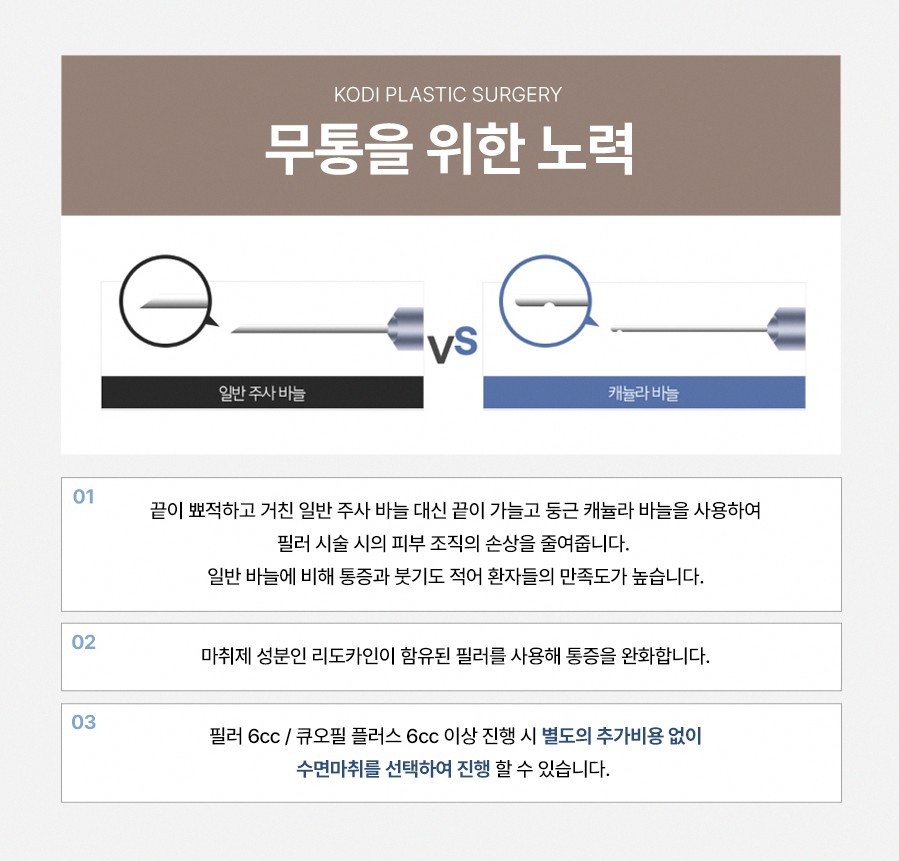
The surgeon may use a fine needle, a blunt-tipped cannula, or a combination. Cannulas can sometimes reduce the risk of bruising and allow safer navigation through delicate tissue, while needles can be useful for very precise placement in selected points. After the filler is injected, the doctor will gently shape the area and check symmetry while you are sitting up, since gravity and posture can influence how the contour appears.
Aftercare and recovery
After under-eye filler, you can usually leave the clinic shortly after a brief observation period. Most people experience mild swelling, a feeling of fullness, and sometimes small bruises, which generally improve over a few days.
You will be advised to avoid rubbing or massaging the under-eye area unless specifically instructed. It is also common to recommend avoiding intense exercise, saunas, hot baths, and alcohol for a short period, as these can increase swelling or bruising. Using a clean, cold compress intermittently may help with comfort, following the clinic’s instructions.
Makeup can often be applied after a specified time, but it is important to follow the guidance you receive to reduce the risk of irritation or infection. If you wear contact lenses, ask whether you should avoid inserting or removing them for a day to prevent unnecessary pulling on the lower eyelid.
A follow-up visit is usually recommended to confirm that the filler has settled well, to evaluate symmetry, and to discuss any minor adjustments. If you are an overseas patient who cannot return easily, consider arranging at least an online follow-up with updated photos.
Safety, risks, and how a specialized clinic manages them
Like all medical procedures, under-eye filler has potential side effects and risks. Common, temporary effects include swelling, bruising, mild tenderness, or a sensation of tightness. Small lumps or slight asymmetry may occur and can sometimes be improved with gentle massage or minor touch-up.
More serious complications are rare but important to understand. These can include vascular occlusion, where filler blocks a blood vessel, or visual disturbance if a vessel connected to the eye is affected. While these events are uncommon, they require immediate recognition and management.
A specialized clinic reduces risk by using conservative dosing, appropriate product choice, and careful technique based on detailed anatomical knowledge. Clinics should have clear protocols for emergency management, including ready access to agents such as hyaluronidase for treating complications related to hyaluronic acid fillers, and appropriate clinical monitoring; having an anesthesiology and pain medicine specialist available to assist with monitoring and acute responses can also improve safety.
Who is not an ideal candidate
Certain situations make under-eye filler less suitable. If you have very large under-eye bags with significant protruding fat, filler may not camouflage them and could even make the area look puffier. In such cases, surgical options like under-eye fat repositioning or lower blepharoplasty may be more appropriate.
If your dark circles are mostly due to pigment in the skin, such as brownish discoloration, filler will not remove this. Other treatments aimed at pigmentation or skin quality may be needed instead.
People with unrealistic expectations, such as wanting a complete erasure of all dark circles or expecting results identical to heavily filtered images, may be disappointed. A good clinic will discuss these limitations clearly and may suggest a combination of treatments or a staged approach.
Local and practical information for Yeoksam visitors
For patients staying near Yeoksam, the area around Gangnam-daero offers convenient access to clinics that focus on eye and filler procedures. KODI PLASTIC SURGERY is located on Gangnam-daero in Seocho-gu, in the Tongyeong Building on the 13th floor, within easy reach of Yeoksam and Gangnam stations.
Weekday and Saturday hours are typically available, and there is usually at least one weekday with extended evening hours, which can help if you are combining treatment with work or travel plans. However, schedules can change, so it is best to check the clinic’s official website or contact them directly for the most up-to-date information.
For international or foreign-resident patients, the availability of multiple language pages, such as English, Chinese, and Japanese, can make it easier to understand procedures, prepare questions, and complete forms.
Frequently asked questions
How long does under-eye hollow filler usually last?
The duration of under-eye filler varies depending on the product used, your metabolism, and how much movement there is in the area. Many patients find that the effect can last from several months up to around a year, sometimes longer, but this is individual. Because the under-eye is a relatively static area compared to the lips or mouth, filler here may persist longer than in more mobile regions. Your surgeon can give a more specific estimate based on the chosen filler and your situation.
Is under-eye filler painful, and what kind of anesthesia is used?
Most people describe under-eye filler as uncomfortable rather than very painful. Clinics usually apply topical anesthetic cream, and in some cases small local anesthetic injections, to reduce discomfort. Many modern fillers also contain a mild anesthetic, which helps as the procedure progresses. In clinics with an anesthesiology specialist, there may be additional options for monitoring and comfort, especially for patients who are anxious or very sensitive.
Can filler fix both hollowness and dark circles?
Filler can improve dark circles that are mainly caused by shadowing from a hollow or deep groove. By lifting the depression, the shadow becomes less intense and the area can look brighter. However, if your dark circles are mostly due to pigmentation in the skin, visible veins, or very thin skin, filler alone will not remove them. In many cases, the best approach is a combination of treatments tailored to the underlying causes.
When is surgery better than filler for the under-eye area?
Surgery is often considered when there are prominent under-eye bags from protruding fat, significant skin laxity, or when previous filler has not given a satisfactory result. Procedures such as under-eye fat repositioning or lower blepharoplasty can address fat and skin directly, which filler cannot. During consultation, the surgeon should explain whether your anatomy is better suited to a surgical or non-surgical approach, and in some cases a staged plan may be recommended.
How soon can I go back to work or sightseeing after under-eye filler?
Many patients feel comfortable returning to work or light sightseeing within one to two days, especially if they can use concealer for any mild bruising. Swelling is usually most noticeable in the first 24 to 48 hours and then gradually settles. If you have an important event or photoshoot, it is safer to schedule it at least several days after the procedure. Always follow your clinic’s specific activity and aftercare guidelines.
Soft call to action for online consultation
If you are considering under-eye hollow or aegyo-sal filler while staying near Yeoksam or planning a trip to Seoul, an online consultation can help you understand whether this treatment suits your under-eye concerns and travel schedule. You can contact KODI PLASTIC SURGERY through its official channels, share clear photos and your goals, and receive guidance on possible treatment plans, expected recovery, and how to coordinate your visit with your time in Korea.




- 공유 링크 만들기
- X
- 이메일
- 기타 앱


댓글
댓글 쓰기