Lunch-break Botox near Gangnam‑daero with minimal downtime
- 공유 링크 만들기
- X
- 이메일
- 기타 앱

Direct answer summary
If you are searching for Yeoksam-dong Botox, you are usually looking for quick wrinkle injections or jawline slimming that you can fit into a busy workday around Gangnam and Seocho. In this area, Botox is commonly used to soften forehead and eye wrinkles, relax frown lines, and reduce bulky jaw muscles for a slimmer lower face, with treatment times often under 15 minutes and minimal downtime. Clinics along Gangnam-daero, including KODI PLASTIC SURGERY in Seocho-gu, are easily reachable from Yeoksam-dong by subway or car, making them convenient for lunchtime or after-work visits.
This guide explains how Botox works, typical treatment areas, what to expect during a visit to Korea, safety points, and how to prepare if you are an overseas patient planning treatment near Yeoksam-dong.
What people around Yeoksam-dong mean by Botox
Around Yeoksam-dong, Gangnam Station, and nearby business districts, Botox usually means a fast, outpatient injection that helps with visible facial movement lines and facial contouring.
For many office workers, this includes:
Forehead lines that appear when raising the eyebrows
Vertical frown lines between the eyebrows
Fine wrinkles at the outer corners of the eyes (crow’s feet)
Wrinkles on the nose when smiling (bunny lines)
Jaw muscle slimming for a softer V-line
Chin dimpling and orange-peel texture
Because clinics in this area often focus on facial aesthetics, Botox is frequently planned together with fillers or lifting procedures. However, even when used alone, it can provide a noticeable but natural softening of expressions when correctly dosed and placed.
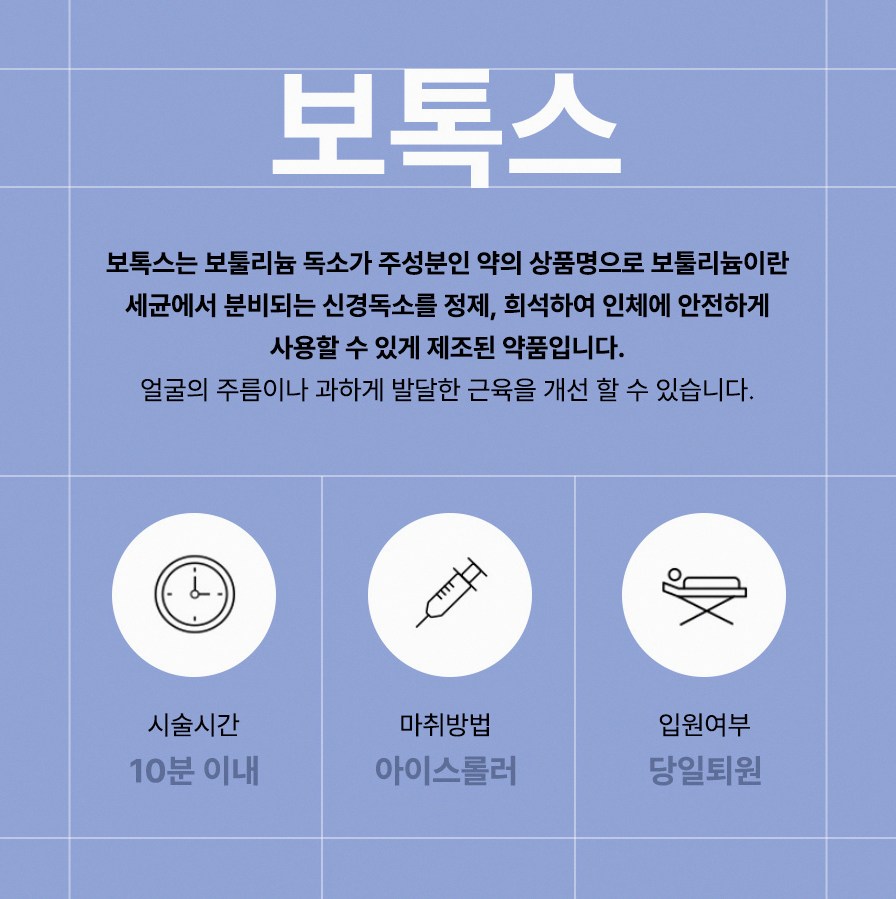
Treatment overview: how Botox works
Botox is a neuromodulator. It temporarily relaxes specific muscles by blocking the signals that tell those muscles to contract.

Dynamic wrinkles are lines that appear when you move your face, such as when you smile, frown, or raise your eyebrows. Over time, these movements create visible creases even at rest. By gently relaxing the overactive muscles, Botox helps the surface of the skin look smoother.
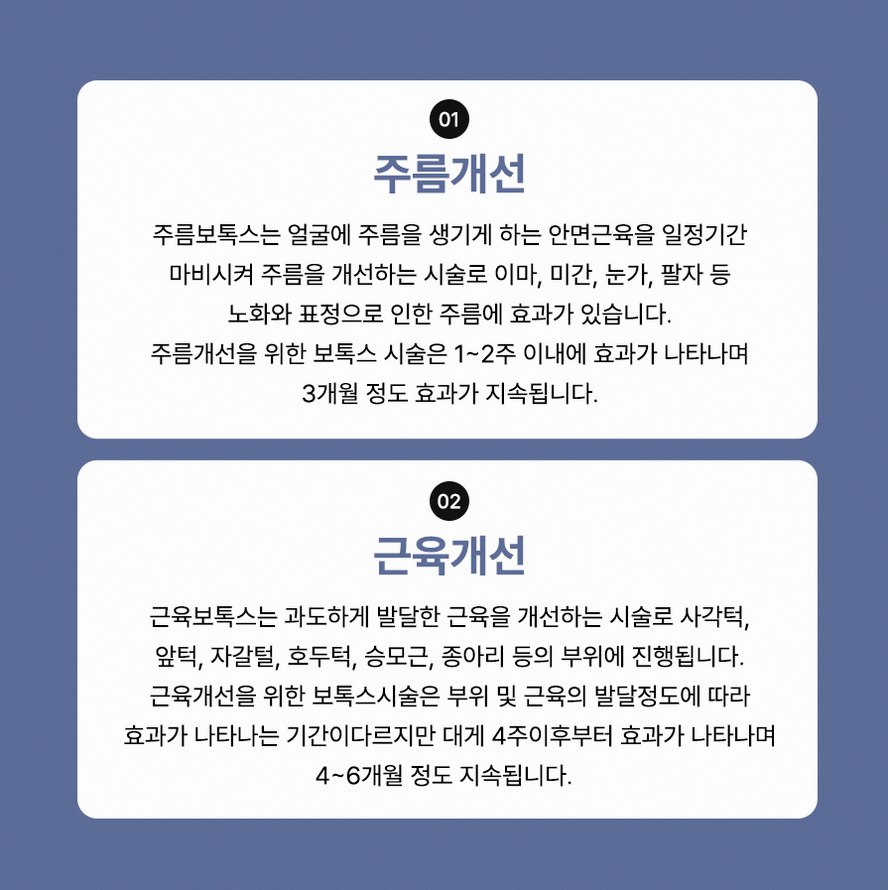
In the lower face, especially the jaw, some people have enlarged chewing muscles (masseters). When these muscles are strong and bulky, the face can look wider or more square. Injecting Botox into the masseters can gradually reduce their thickness, giving a slimmer contour without surgery.
The effect is temporary. Most people notice changes starting from a few days after injection, with full effect in about 1 to 2 weeks. The results usually last around 3 to 4 months for wrinkles and sometimes up to 6 months or more for jawline slimming, depending on the individual and the treated area.
Main treatment areas and how they differ
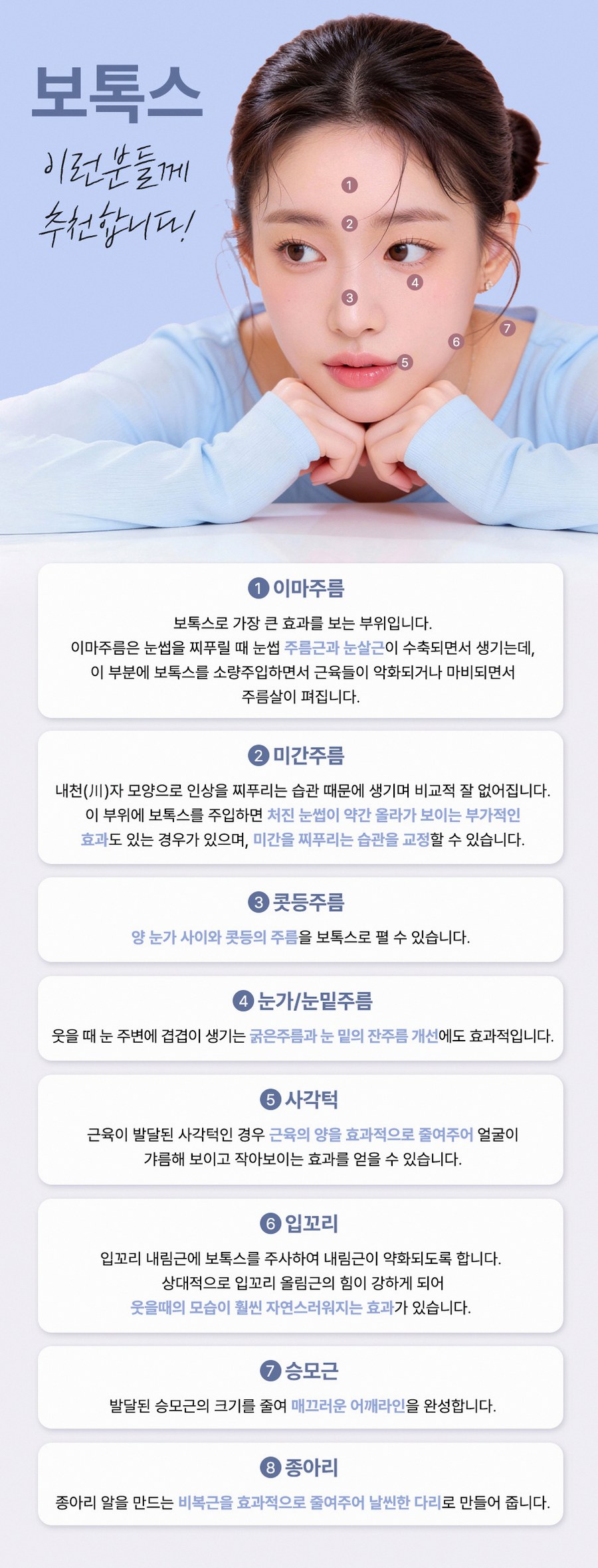
Forehead lines
Forehead Botox aims to soften horizontal lines without dropping the eyebrows. The injector must balance muscle relaxation so that you keep a natural ability to raise your brows slightly, while still reducing the deep creases. Dose and injection depth are adjusted according to how strong your forehead muscles are and how much you use them when expressing.
Glabella (between the eyebrows)
The glabella is the area between the eyebrows where vertical frown lines appear. These lines can give a tired or angry look even when you feel fine. Botox here targets the frown muscles that pull the brows inward. Careful placement is important to reduce the lines while avoiding drooping of the inner eyebrows.
Crow’s feet (outer eye area)
Crow’s feet form at the outer corners of the eyes when you smile or squint. Botox in this area is usually done with small, shallow injections around the eye corner. The goal is to soften the fan-shaped lines while keeping your natural eye shape and smile.
Bunny lines (nose wrinkles)
Some people develop diagonal or horizontal lines on the nose when they smile or laugh. Small doses of Botox can relax the nose muscles that create these lines. Because the area is small, overdosing can affect nearby expressions, so precise dosing is important.
Chin dimpling and orange-peel texture
An overactive chin muscle can cause small dimples or an uneven, pebbled look when talking or closing the mouth. Botox here relaxes the chin muscle so the surface appears smoother. The injector must consider your bite and lip position when planning this area.
Jawline masseter slimming
This is one of the most popular Botox uses around Yeoksam-dong. When the masseter muscles are thick from chewing or clenching, the lower face can look wide. Botox injections into these muscles can gradually reduce their bulk.
Results are not immediate. Over several weeks to a few months, as the muscle becomes less active, it can shrink in size. Repeated treatments at appropriate intervals can help maintain a slimmer jawline. Because the masseter is a functional chewing muscle, it is important that the injector understands anatomy and uses a safe technique to avoid affecting nearby structures.
Neck bands
Some people have vertical neck bands caused by the platysma muscle pulling. Small amounts of Botox along these bands can soften their appearance and improve the jawline-neck transition. This area requires careful assessment, as neck anatomy and skin laxity vary greatly.
Who may consider Yeoksam-dong Botox
People living or working around Yeoksam-dong, Gangnam, or Seocho often consider Botox if they:
Notice forehead, frown, or eye wrinkles that make them look tired or stressed
Want a softer, slimmer jawline without surgery
Prefer a quick procedure that fits into a lunch break or after work
Need subtle, natural-looking changes that suit a professional environment
Are looking for maintenance anti-aging care rather than dramatic one-time changes
Botox may be considered by adults in their late 20s to 40s and beyond. In younger adults, it is sometimes used as a preventive measure to slow the deepening of expression lines. In older adults, it can be combined with fillers or lifting procedures to address both lines and volume loss.
However, Botox is not suitable for everyone. People who are pregnant or breastfeeding, have certain neuromuscular conditions, or have specific allergies may be advised to avoid it. A direct consultation with a qualified doctor is necessary before deciding.
Online consultation and pre-visit preparation for overseas patients
If you are planning to travel to Korea and stay near Yeoksam-dong or Gangnam, you can usually start with an online consultation.
Typical online consultation steps include:
Sending clear photos of your face from the front and sides in a relaxed state and while making expressions (raising brows, frowning, smiling)
Sharing your age, general health status, current medications, and any history of previous Botox or filler treatments
Explaining your main concerns, such as specific wrinkles or jaw width, and the level of change you want (very subtle, moderate, or more noticeable)
Asking about expected number of units, approximate duration of effect, and how many days you should stay in Korea for follow-up
Before your visit, prepare a simple medical summary in English including:
Any chronic illnesses
List of medications and supplements
History of allergies or past reactions to injections or anesthesia
Previous facial treatments or surgeries
It is also helpful to write down your questions in advance, such as:
How natural will my expressions look after treatment
How often might I need to repeat Botox for maintenance
What is the plan if I feel the effect is too strong or too weak
What kind of follow-up is available for overseas patients
Expected Korea visit timeline for Botox near Yeoksam-dong
For most international visitors, Botox can be scheduled efficiently within a short stay.
Day 1: Consultation and possible treatment
Arrival and clinic visit near Gangnam-daero in Seocho-gu, easily accessible from Yeoksam-dong by subway or bus
Face-to-face consultation and facial analysis, checking wrinkle patterns, muscle strength, and facial balance
Discussion of realistic results, how long the effect may last, and which areas are suitable for you
Cleansing of the treatment area, marking injection points, and performing the injections, usually within 10 to 15 minutes
Immediate return to daily activities with basic aftercare instructions
Days 2 to 7: Early changes
Mild swelling or small injection marks may appear but usually fade within a few days
You may start to notice early softening of movement from around day 3 to 5, depending on the product and your body
Most people can work, shop, and travel normally during this time
Days 7 to 14: Full effect
The final effect is usually visible around 1 to 2 weeks after treatment
If you are still in Korea, some clinics may offer a brief follow-up check during this period
If you have already returned home, you can usually share photos by email or messaging for a remote review if needed
Medium term: Maintenance planning
Effects typically last 3 to 6 months depending on the area and individual
Many people plan return visits to Korea once or twice a year and combine Botox with other facial treatments
Your doctor can help you plan a schedule that fits your travel pattern and work life
Step-by-step process in the clinic
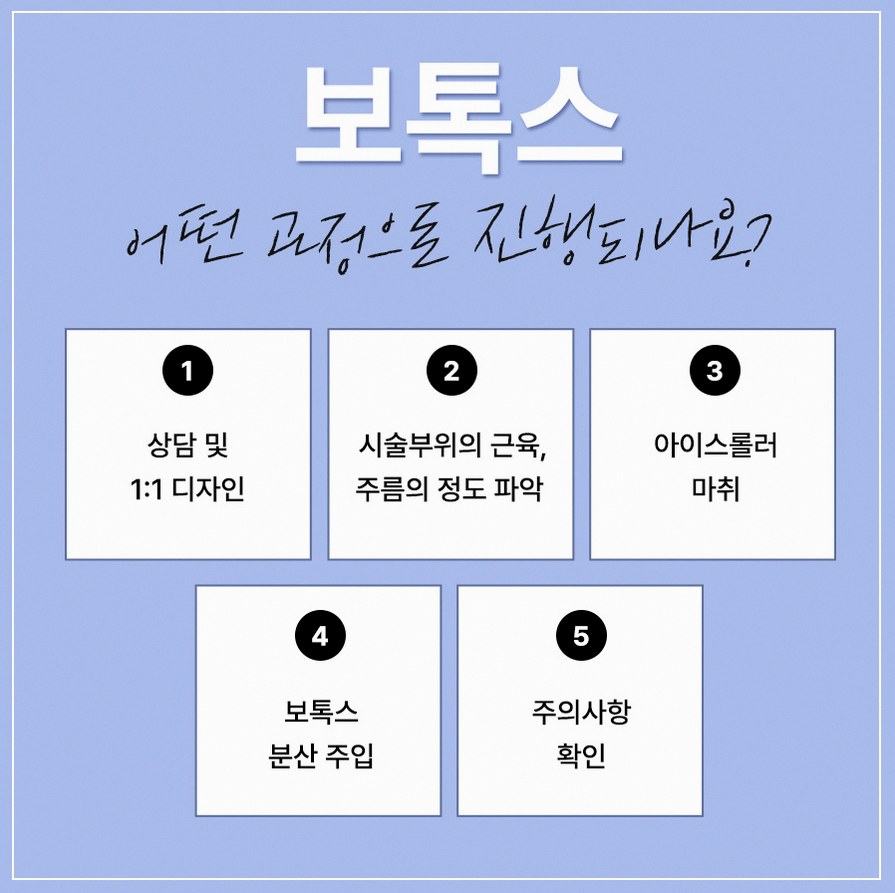
Consultation and facial analysis
The doctor will examine your face at rest and during movement, checking how your muscles work together. They will ask about your past treatments and what kind of expression you want to maintain.
Explanation of plan and duration
You will receive an explanation of which areas will be treated, approximate units, expected onset time, and how long the effect may last. The doctor should also discuss possible side effects and alternative options if Botox is not suitable for some areas.
Preparation and marking
Your skin will be cleansed, and injection points may be marked. In some cases, a numbing cream or ice pack is used, although many people tolerate Botox injections without strong anesthesia because the needles are very fine.
Injection
The injection itself usually takes less than 10 to 15 minutes, depending on the number of areas. You may feel brief pinpricks or slight pressure. Most people do not need to lie down for long and can sit up immediately afterward.
Post-treatment instructions
You will receive instructions about what to avoid on the same day, how to manage any mild bruising, and when to expect results. You can normally return to work or sightseeing right away.
Aftercare and precautions
After Botox near Yeoksam-dong, typical aftercare includes:
Avoid rubbing or massaging the treated areas for several hours, or as advised
Avoid lying flat or bending your head down for a few hours if your doctor recommends keeping the head upright
Skip intense exercise, sauna, or very hot baths on the same day, as increased blood flow may affect the spread of the product
Do not apply strong pressure when cleansing or applying skincare over the treated areas on the first day
Common temporary side effects can include:
Mild redness, swelling, or small bumps at injection points
Light bruising in some spots
Slight tightness or a different feeling in the treated muscles as they start to relax
These usually improve within a few days. However, you should contact the clinic promptly if you notice:
Severe or persistent pain
Marked asymmetry or drooping of eyelids or eyebrows
Difficulty speaking, swallowing, or breathing
Signs of an allergic reaction such as widespread rash or swelling
Safety and why the injector matters in Yeoksam-dong and Gangnam
The Yeoksam-dong and Gangnam area has many clinics, and price competition can be strong. When choosing where to receive Botox, especially as an overseas patient, it is important to look beyond cost alone.
Points to consider include:
Whether a qualified doctor with experience in facial anatomy performs or closely supervises the injections
Whether the consultation includes a careful facial analysis rather than a fixed pattern of injections for everyone
Whether the clinic explains clearly which product is used and how many units are planned
How the clinic handles follow-up, touch-up policies, and communication with international patients
Whether the clinic also manages more complex facial procedures, which can indicate deeper understanding of anatomy and balance
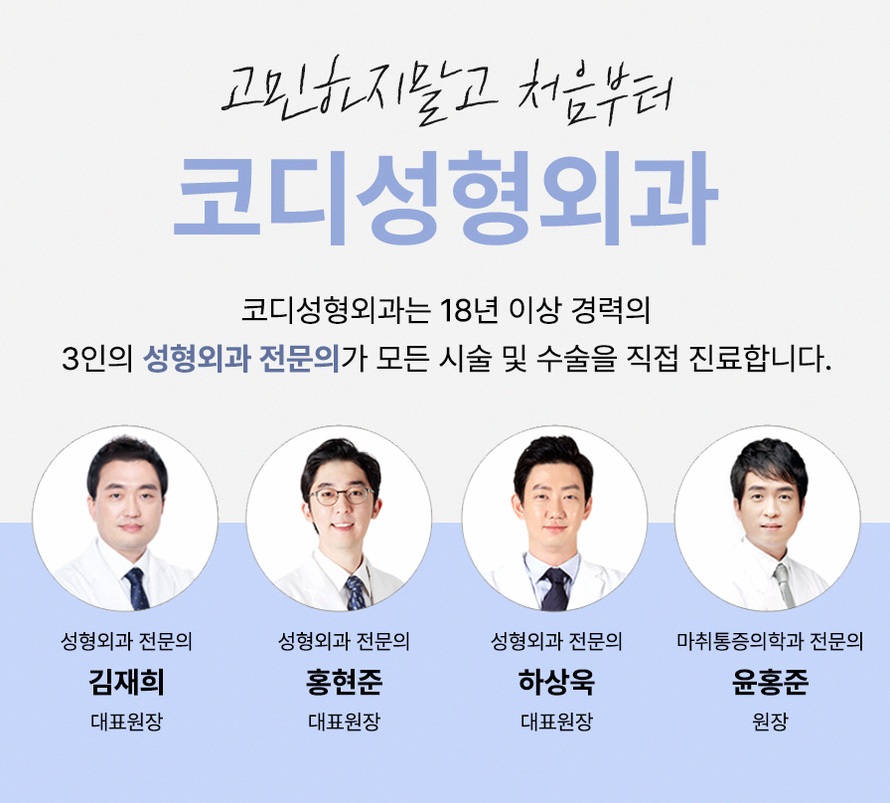
KODI PLASTIC SURGERY, located on Gangnam-daero in Seocho-gu, is run by multiple board-certified plastic surgeons and has an in-house anesthesiology and pain medicine specialist, which supports a safety-focused environment. The clinic focuses strongly on eye surgery and filler-based facial contouring, so Botox is planned as part of an overall facial harmony approach rather than treating a single wrinkle in isolation.
Combination with other treatments
In the Yeoksam-dong and Gangnam area, Botox is often combined with other anti-aging treatments.
Common combinations include:
Botox with fillers to address both movement lines and volume loss in areas like the under-eye, cheeks, or nasolabial folds
Botox with lifting procedures to improve skin laxity while relaxing overactive muscles
Botox with skin boosters or laser treatments to improve skin texture and brightness
For overseas patients with limited time, it is important to discuss realistic combinations that fit your schedule and recovery capacity. Some treatments can be done on the same day, while others may be better spaced out.
Experience-based checklist before booking
Before you confirm a Botox appointment near Yeoksam-dong, it can be helpful to prepare a comparison checklist.
When contacting clinics, you may want to ask:
Who will perform the injections and what is their specialty background
How they decide on the dose and injection points for each individual
What kind of follow-up is available if you are staying only a few days in Korea
Whether they can communicate in English or provide translated explanations
Beyond price, consider:
Whether you receive a personalized treatment plan or only a pre-set package
How much time is allocated for consultation versus injection
If there is a clear record of which product and units were used, in case you want to repeat treatment later
Writing these questions down and bringing them to your consultation can help you make a more confident, informed decision.
How this clinic approaches Botox within its facial focus
At clinics that emphasize eye surgery and filler contouring, Botox is usually planned to support overall facial balance.
For example, if you have strong frown lines and also volume loss around the eyes, the doctor might suggest Botox for the dynamic wrinkles and fillers for hollow areas, so that the eye region looks more rested without a frozen appearance.
For jawline concerns, the plan may combine masseter Botox with chin or jawline fillers to refine the lower face shape. The aim is typically to create a natural, harmonious profile that suits your existing features.
At KODI PLASTIC SURGERY, Botox is one part of a broader anti-aging program that can also include fillers, lifting, and fat grafting. This allows the medical team to consider how each injection will affect your expressions and overall impression rather than focusing on one line at a time.
Frequently asked questions
How painful is Botox and can I return to work right away
Most people describe Botox injections as quick pinpricks or light stings rather than strong pain. Very fine needles are used, and some clinics apply numbing cream or ice to make the process more comfortable. In the Yeoksam-dong and Gangnam area, many office workers receive Botox during lunch breaks and return to work immediately. You may have small red spots or mild swelling for a short time, but makeup can usually be applied after a few hours if your doctor agrees.
How long do Botox results last and when should I repeat treatment
The effect usually starts to appear within a few days and reaches its peak around 1 to 2 weeks. For forehead, frown, and eye areas, results commonly last about 3 to 4 months, though this can vary. For jawline masseter slimming, some people notice benefits for 4 to 6 months or longer. Many patients repeat treatment two to three times a year for maintenance. Your doctor can suggest a schedule based on how quickly your muscles recover and your travel plans.
Can I wear makeup and exercise after Botox
Light makeup can often be applied a few hours after treatment, once any pinpoint bleeding has stopped, but you should avoid pressing or rubbing the treated areas strongly on the same day. Intense exercise, heavy lifting, or activities that increase facial flushing are usually postponed until the next day to reduce the risk of product migration or bruising. Always follow the specific instructions given by your injector, as recommendations may differ slightly by area and individual.
Is Botox safe for overseas patients visiting Yeoksam-dong and Gangnam
When performed by a qualified and experienced doctor using approved products, Botox is widely used and generally considered safe. However, like any medical procedure, it carries potential risks and side effects. As an overseas patient, it is important to choose a clinic that provides clear communication, proper consultation, and follow-up options. Make sure to share your full medical history, allergies, and previous treatments, and allow enough time in Korea for at least one follow-up check if possible.
Soft call to action for online consultation
If you are planning a trip to Seoul and are considering Yeoksam-dong Botox for wrinkle care or jawline slimming, an online consultation can help you understand what is realistic for your face and schedule before you arrive. By sharing photos and your goals in advance, you can often shorten the in-clinic process and make better use of your time in Korea.
KODI PLASTIC SURGERY on Gangnam-daero in Seocho-gu is a convenient option for people staying or working around Yeoksam-dong, with weekday evening and Saturday hours on certain days. Because exact hours and availability can change, it is best to check the latest information or contact the clinic directly for an online consultation and appointment planning.
Medical information notice
This article is provided for general information to help international patients understand Botox options around Yeoksam-dong and Gangnam. It does not replace a personal consultation, diagnosis, or treatment plan from a qualified medical professional. Individual suitability, risks, and expected results can only be assessed through direct evaluation by a doctor. Always discuss your specific situation and medical history with a healthcare provider before deciding on any procedure.




- 공유 링크 만들기
- X
- 이메일
- 기타 앱


댓글
댓글 쓰기