Pain, Swelling, Recovery for Overseas Patients
- 공유 링크 만들기
- X
- 이메일
- 기타 앱
When people search for Gangnam thread lift reviews, they are usually trying to find out three things: how painful the procedure is, how natural and long‑lasting the lifting effect looks, and how long swelling and bruising last before they can return to work or travel. Online discussions and publicly shared comments from the Gangnam and Seocho areas commonly describe a temporary pulling or tight sensation along the jawline and cheeks, short‑term swelling or bruising, and an initial lifting effect that may soften over time.
Patients who are happiest in these reviews tend to be those with mild to moderate sagging, who wanted a subtle, fresher look rather than a dramatic change, and who understood that a non‑incisional thread lift is not the same as a full surgical facelift. Less satisfied reviewers are often those who expected a very strong lift, or did not receive clear explanations about aftercare and realistic duration of results.
This guide explains what a non‑incisional thread lift is, how to read Gangnam thread lift reviews without being misled, what to expect before and after the procedure, and what to check when you consult a clinic in the Gangnam‑daero and Seocho‑gu area, such as KODI PLASTIC SURGERY.
What Gangnam thread lift reviews really say
Common topics in real reviews
If you read a variety of Gangnam thread lift reviews, you will notice the same themes appear again and again.
Pain and discomfort: Many patients describe the procedure as tolerable but not completely painless. They often mention a sting from local anesthesia injections and some pressure or tugging as the threads are placed. After the procedure, people commonly report mild to moderate soreness for a few days, especially when chewing or laughing.
Swelling and bruising: Reviews often mention swelling along the jawline, cheeks, or entry points where the threads were inserted. Some people also see small bruises along the path of the threads. Swelling usually improves over several days, and bruising often fades within one to two weeks, depending on individual healing.

Tightness and pulling: A tight or pulling sensation is one of the most frequently mentioned points. Patients feel it especially when opening the mouth wide, smiling broadly, or sleeping on the side. Most reviews say this improves gradually over one to several weeks as the tissues adapt.
Lifting effect and natural look: Many reviewers focus on whether their jawline looks sharper, whether early jowls have improved, and whether nasolabial folds (smile lines) look softer. Satisfied patients often use words like fresher, less tired, or slightly lifted rather than completely different. People who hoped for a facelift‑level change sometimes feel the improvement is too subtle.
How long the effect lasts: Reviews from the Gangnam area often describe a noticeable lift for several months, then a gradual softening. Some people feel they maintain a benefit for a year or more, while others feel the effect is shorter. Age, skin quality, lifestyle, and thread type all influence this, so experiences vary widely.
Asymmetry and small irregularities: Some reviews mention that one side felt tighter than the other at first, or that there was slight dimpling or irregularity in the skin. In many cases, these issues improve as swelling goes down and tissues settle, but a few reviewers describe needing follow‑up adjustments.
Pros and cons mentioned in Gangnam‑area reviews
When patients talk specifically about having a thread lift in the Gangnam and Seocho medical district, they often mention both advantages and drawbacks.
Pros include easy access by public transport, many clinics in a small area, and the ability to compare different approaches and treatment plans. International visitors appreciate that staff in this district are often familiar with overseas patients and can help coordinate schedules around short trips.
Cons include very mixed quality between clinics, aggressive marketing, and difficulty knowing which reviews are genuine. Some patients mention feeling rushed during consultation or pushed toward additional procedures they did not originally plan.
How to read thread lift reviews without being misled
Spotting more trustworthy reviews
When you read Gangnam thread lift reviews, look for signs that the reviewer is describing a real, detailed experience rather than repeating promotional phrases.
More trustworthy reviews usually include:
Specific details about the treatment area, such as jawline, mid‑face, or nasolabial folds.
Descriptions of pain level, swelling, bruising, and tightness, not just the final result.
A realistic timeline, for example, when they returned to work, when bruising faded, and how the lift looked after a few months.
Comments about the consultation, including whether the doctor explained thread type, insertion direction, expected duration, and possible side effects.
Mentions of follow‑up visits and how the clinic responded to concerns like dimpling, asymmetry, or lingering discomfort.
Warning signs of promotional or low‑value reviews
Be cautious with reviews that look like advertisements. Red flags include:
Very short or generic praise with no details, such as only saying it was amazing or no pain at all without explaining anything.
Many reviews that sound almost identical, posted around the same time.
No mention of the doctor’s name, role, or any explanation given during consultation.
Complaints from other reviewers about being pressured into extra procedures, or about unexpected additional costs.
If you see a mix of positive and negative reviews, read both types carefully. Sometimes a negative review highlights a communication issue or expectation mismatch that you can avoid by asking better questions during your own consultation.
What a non‑incisional thread lift actually is
Basic concept
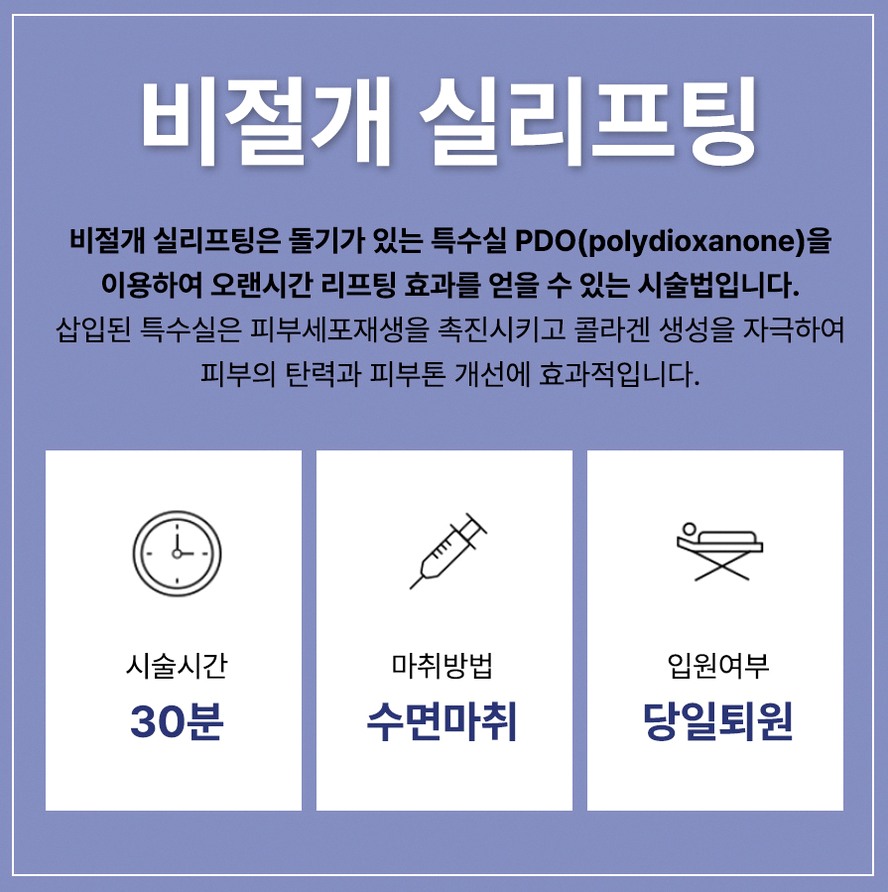
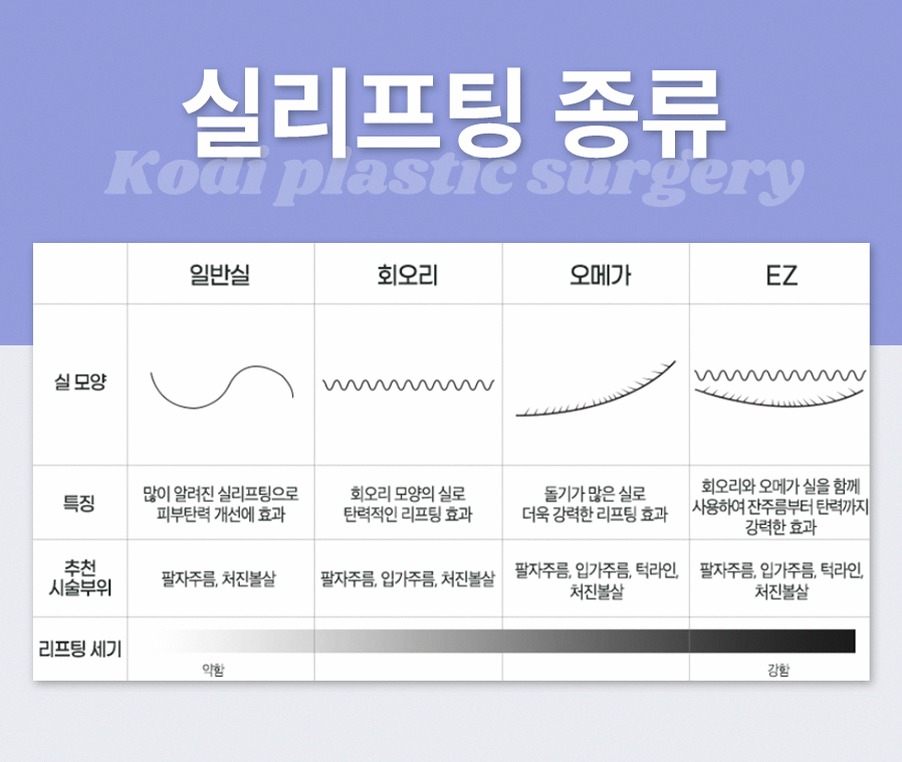
A non‑incisional thread lift uses dissolvable threads placed under the skin to gently lift sagging tissues. Instead of making long incisions, the doctor creates small needle entry points, usually near the hairline or in hidden areas, and then passes the threads through the deeper layers of the skin.
These threads often have tiny barbs or cones that catch the tissue and allow the doctor to reposition it upward. Over time, the threads gradually dissolve, and the body forms new collagen around them, which may help support the lifted area for a period.
Typical treatment areas
In the Gangnam and Seocho area, thread lifting is commonly used for:
Jawline and early jowls, to create a sharper lower face contour.
Cheeks and mid‑face, to reduce a tired or sagging look.
Nasolabial folds, by lifting the cheek tissues that contribute to deep smile lines.
Who may consider a thread lift
Good candidates
People who tend to be good candidates for non‑incisional thread lifting usually share some of these characteristics:
Mild to moderate sagging rather than very heavy or severe laxity.
Early jowls or a slightly blurred jawline.
Flattened mid‑face or cheeks that have started to descend.
Desire for a quicker recovery and less invasive option than a full facelift.
Willingness to accept a moderate, natural‑looking improvement instead of a dramatic change.
In a clinic like KODI PLASTIC SURGERY, thread lifting is one part of a larger anti‑aging plan that may also include mini facelift, full facelift, injectables such as botox or contour injections, and fat grafting. During consultation, the doctor will usually assess whether threads alone are suitable or whether combining them with volume correction or skin treatments would give a more balanced result.
Limitations of a thread lift
A non‑incisional thread lift is not a substitute for a full surgical facelift in every case. Important limitations include:
The lifting power is more modest compared to surgery, especially in patients with very loose skin or significant volume loss.
The effect is temporary and gradually decreases over time as the threads dissolve and natural aging continues.
Some degree of asymmetry or minor irregularity can occur, especially in the early healing phase.
Multiple treatments over the years may be needed to maintain the effect.
If your main concern is very heavy sagging, large skin folds, or a lot of excess skin, a plastic surgeon may recommend a surgical approach instead of or in addition to threads.
What to expect before and after a thread lift in Gangnam
Immediate post‑procedure period
Right after a non‑incisional thread lift, you can expect:
Numbness from local anesthesia that gradually wears off.
Mild to moderate pain or soreness as the anesthesia fades, usually controlled with oral pain medication.
Swelling along the thread paths, especially around the jawline and cheeks.
Small needle marks or tiny entry points that usually close quickly.
A tight, pulled feeling when opening the mouth wide, chewing, or laughing.
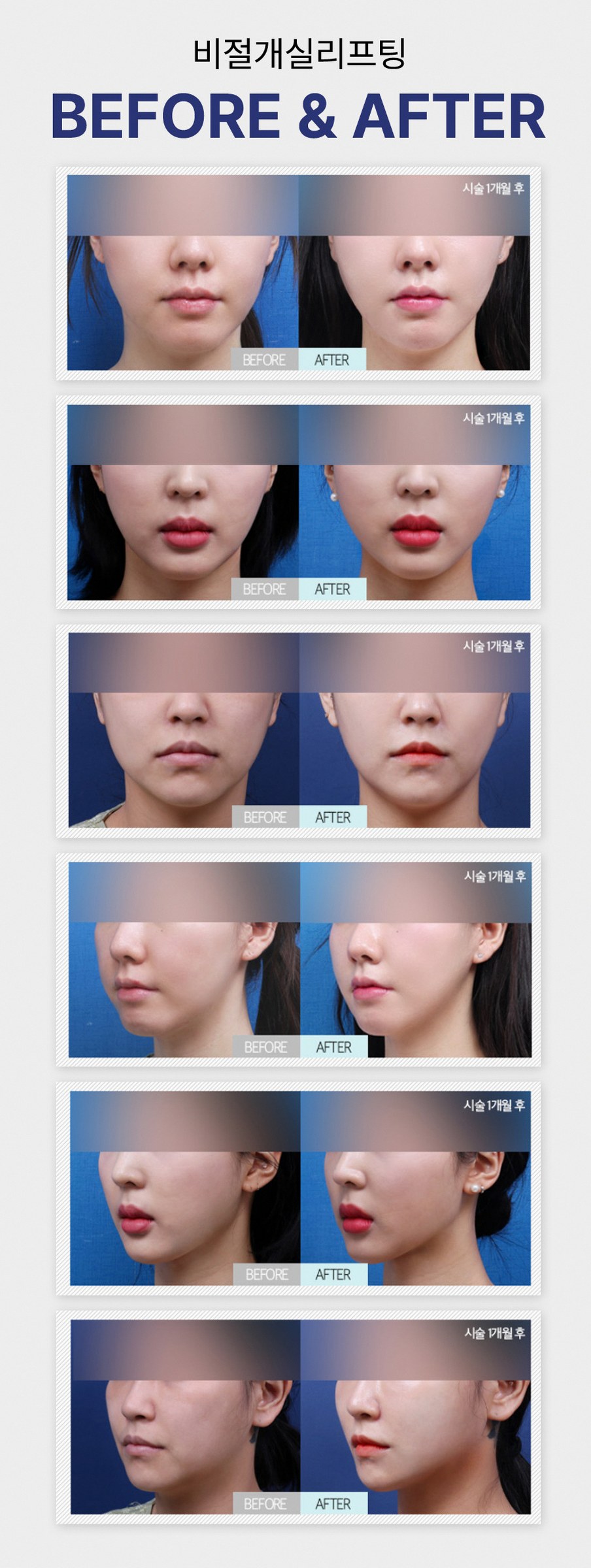
Many patients in reviews say they feel presentable for casual outings after a few days, but may still notice swelling or small bruises. If you are traveling from overseas, it is usually wise to plan at least a few days of quiet time after the procedure.
Short‑term recovery timeline
Experiences vary, but based on typical review patterns:
First 2 to 3 days: Swelling and tightness are usually most noticeable. Some patients prefer to rest at their hotel or home during this time.
First week: Swelling starts to improve. Bruising, if present, may still be visible but often begins to fade. Many people feel comfortable returning to work with light makeup.
One to two weeks: Most bruising and obvious swelling have usually improved significantly. The face may still feel tight or slightly uneven, but this often becomes less noticeable.
Your doctor will give specific instructions about sleeping position, avoiding heavy exercise, and limiting wide mouth movements for a certain period. Following these instructions can help reduce complications and support a smoother result.
Mid‑ to long‑term expectations
Over the following months, patients commonly describe:
A visible lifting effect for several months, especially along the jawline and mid‑face.
Gradual softening of the tight feeling as tissues settle and adapt.
Slow, natural decrease in the lifting effect as the threads dissolve and aging continues.
Some people choose to combine a thread lift with other treatments, such as fillers for volume or botox for dynamic wrinkles. Reviews suggest that those who treat both sagging and volume loss together often feel more satisfied with the overall improvement.
Satisfaction patterns in real reviews
Patients who tend to be more satisfied usually:
Have mild to moderate sagging rather than very severe laxity.
Want a subtle, refreshed look rather than a dramatic transformation.
Understand that results are temporary and vary from person to person.
Follow aftercare instructions carefully and attend follow‑up visits.
Patients who are more likely to feel disappointed often:
Expect a full facelift‑level change from threads alone.
Do not receive clear explanations about realistic duration and limitations.
Ignore or do not fully understand aftercare instructions.
Focus only on price when choosing a clinic, without checking medical staff structure or consultation quality.
How to choose a Gangnam or Seocho clinic for thread lifting
What to look for in reviews and clinic information
When comparing clinics in the Gangnam‑daero and Seocho‑gu area, consider the following points:
Before‑and‑after photos: Look for photos of patients close to your age and with a similar degree of sagging. Extremely dramatic changes may indicate different procedures or unrealistic expectations.
Consultation quality: Reviews that mention detailed facial analysis, explanation of thread type and direction, and honest discussion of limitations are a good sign.
Pain control and monitoring: Some clinics, including KODI PLASTIC SURGERY, have an in‑house anesthesiology and pain medicine specialist. This can help with safer sedation options and more careful monitoring for patients who are anxious about pain or have medical conditions.
Follow‑up care: Look for comments about how the clinic handled concerns like dimpling, asymmetry, or prolonged discomfort. A clinic that encourages follow‑up visits and responds to questions is usually more reassuring for overseas patients.
Why medical staff structure matters
In a well‑organized clinic, thread lifting is performed by plastic surgeons who are trained to understand facial anatomy, aging patterns, and how threads interact with skin and deeper tissues. Having an anesthesiology and pain medicine specialist on site can support:
Safer sedation options for patients who are very nervous or sensitive to pain.
Better monitoring of breathing, blood pressure, and comfort during procedures.
More tailored pain management plans, especially if you have underlying health conditions.
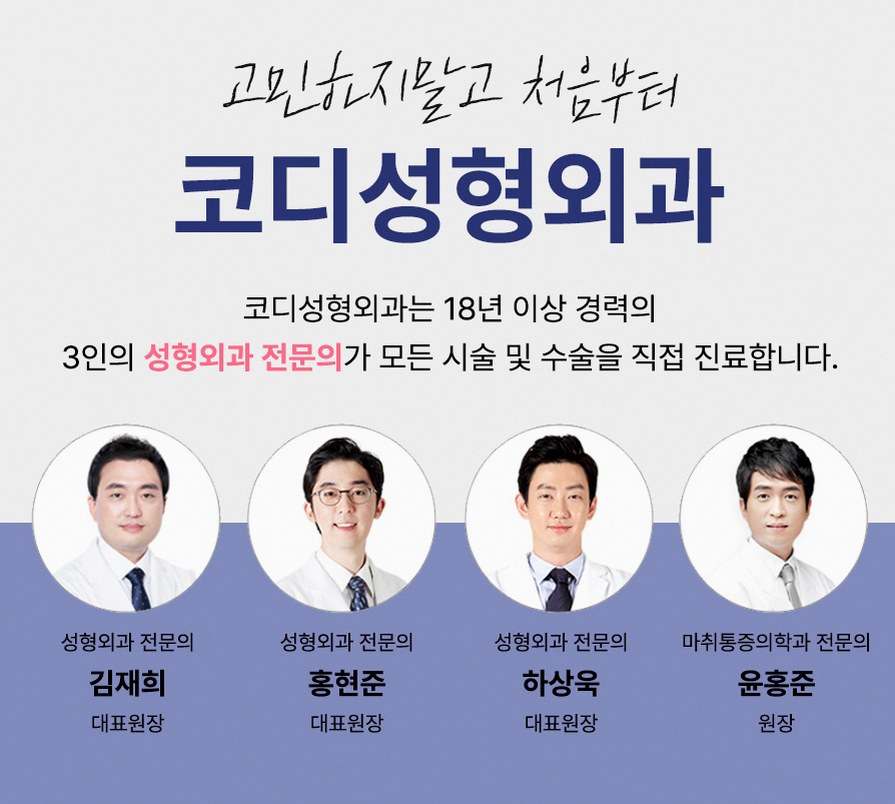
For international patients, this structure can add a layer of safety and comfort, especially when you are far from home.
Typical consultation and procedure flow in Gangnam
Pre‑consultation and facial analysis
Before any thread lift, a careful consultation is essential. A typical process at a Gangnam clinic might include:
Medical history review, including medications, allergies, and previous procedures.
Facial analysis to evaluate skin laxity, volume loss, facial asymmetry, and muscle activity.
Discussion of your main concerns, such as jawline sagging, mid‑face drooping, or deep nasolabial folds.
Evaluation of whether threads alone are suitable, or whether combining them with fillers, botox, fat grafting, or even a mini facelift would provide a more balanced result.
Planning the thread lift
If you and the doctor decide to proceed with a non‑incisional thread lift, the planning stage usually covers:
Thread type: Different threads have different shapes and strengths. The doctor may choose specific types for lifting versus subtle tightening.
Number of threads: This depends on the area treated and the degree of sagging.
Vector or direction of lift: The doctor draws lines on your face to plan how the tissues will be pulled, for example, up toward the temples for mid‑face lift or backward for jawline definition.
At clinics that focus on detailed, area‑specific planning, such as those that also specialize in eye surgery and filler procedures, you may find that the doctor pays close attention to how each area of the face works together rather than relying on a single, one‑off lift.
Day of the procedure
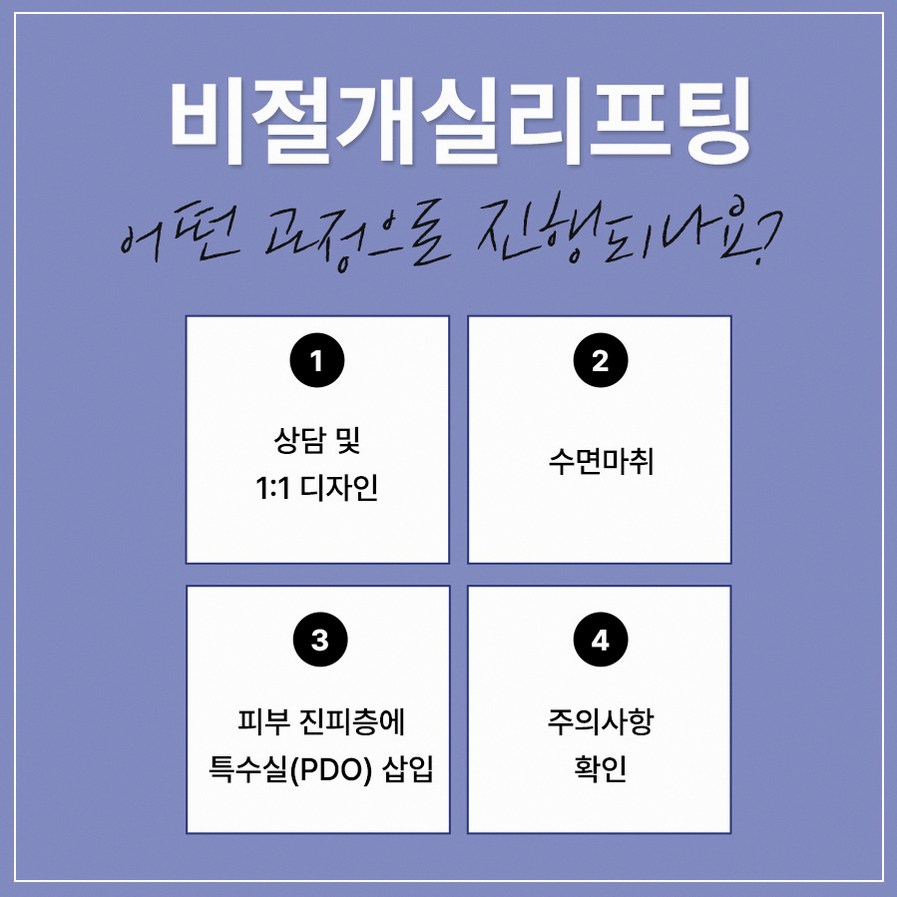
On the treatment day, the typical steps are:
Cleansing and marking: The face is cleaned, and the doctor marks the planned thread paths and entry points.
Anesthesia: Local anesthesia is injected along the thread paths. In some cases, light sedation may be offered, especially if an anesthesiology specialist is available to supervise.
Thread insertion: Using a fine needle or cannula, the doctor inserts the threads through small entry points and positions them under the skin.
Adjustment and trimming: Once the threads are in place, the doctor gently tightens them to achieve the planned lift and trims any excess.
Immediate cooling: Ice packs or cooling pads may be applied to reduce swelling.
Procedure duration varies depending on the number and extent of treatment areas; consult the clinic for an estimate specific to your case.
Immediate aftercare and instructions
After the procedure, you will receive instructions such as:
Apply cold compresses as directed to reduce swelling.
Sleep on your back with your head elevated for several days.
Avoid wide mouth opening, very chewy foods, or big yawns for a certain period.
Avoid heavy exercise, saunas, and facial massage until your doctor says it is safe.
Keep the entry points clean and avoid makeup on those spots for a short time.
Following these guidelines can reduce the risk of complications and help the threads stay in the correct position while the tissues heal.
Aftercare, safety, and when to contact the clinic
Common temporary side effects
Most patients experience at least some of the following after a non‑incisional thread lift:
Swelling along the thread paths.
Bruising near the entry points or along the jawline and cheeks.
Tightness, pulling, or mild pain, especially with facial movements.
Slight asymmetry or unevenness in the early days as swelling is rarely perfectly equal on both sides.
These effects are usually temporary and improve over days to weeks. Your doctor may prescribe pain medication and, in some cases, medication to help with swelling.
When to seek medical attention
You should contact the clinic promptly if you notice:
Severe or increasing pain that does not improve with prescribed medication.
Signs of infection, such as redness, warmth, pus, or fever.
Persistent dimpling or puckering that does not improve as swelling goes down.
Obvious thread visibility or exposure through the skin.
For overseas patients, it is especially important to know how to reach the clinic after you return home, in case you have questions or concerns.
Online consultation and pre‑visit preparation for overseas patients
Before traveling to Korea for a thread lift, an online consultation can help you decide whether the trip is worthwhile and how to plan your schedule.
During an online consultation, you can usually:
Send clear front and side photos of your face for initial assessment.
Explain your main concerns and what kind of change you hope for.
Share your medical history, including any chronic conditions and medications.
Ask whether a thread lift alone is likely to be suitable, or whether combination treatment is recommended.
Discuss approximate recovery time so you can plan your stay.
It can be helpful to prepare a list of questions, such as:
Which areas do you recommend treating with threads in my case?
What kind of improvement is realistic for me, and how long might it last on average?
What type of anesthesia or sedation do you use, and who monitors it?
How many follow‑up visits are needed, and can any be done online after I return home?
Expected Korea visit timeline for a thread lift
A simple example timeline for an overseas patient might look like this:
Day 1: Arrival in Seoul, rest and adjust to the time zone.
Day 2: In‑person consultation and facial analysis. If both you and the doctor agree, the procedure may be done the same day or scheduled for the next day.
Day 2 or 3: Non‑incisional thread lift procedure at the clinic. Return to hotel afterward to rest.
Days 3 to 5: Quiet days in Seoul, light sightseeing if you feel comfortable, avoiding heavy exercise and crowded, hot environments.
Day 5 to 7: Follow‑up visit at the clinic to check healing, remove any remaining marks, and answer questions.
Day 7 or later: Return flight, with ongoing online contact if needed.
The exact schedule depends on your personal situation, the clinic’s policy, and whether you combine the thread lift with other treatments.
Frequently asked questions about Gangnam thread lifts
How painful is a non‑incisional thread lift in Gangnam?
Most patients describe the procedure as tolerable. Local anesthesia is used to numb the treatment area, so you mainly feel pressure or tugging rather than sharp pain. After the procedure, mild to moderate soreness is common for a few days, especially when chewing or laughing. Pain is usually manageable with oral medication prescribed by the doctor.
How long do thread lift results usually last?
The duration of a thread lift varies from person to person. Many reviews from the Gangnam area mention a noticeable effect for several months, with gradual softening over time. Factors such as age, skin quality, lifestyle, and thread type all influence how long the lifting effect is visible. It is important to understand that results are not permanent and that natural aging continues.
Can I combine a thread lift with other treatments during my Korea trip?
Yes, many patients combine thread lifting with other anti‑aging treatments such as fillers, botox, or fat grafting, depending on their needs. In clinics that offer a full anti‑aging lineup, the doctor may suggest addressing both sagging and volume loss for a more balanced result. However, the exact combination and timing should be decided during consultation, based on your facial analysis and safety considerations.
Is a thread lift enough if I have severe sagging?
In cases of severe sagging or a lot of excess skin, a non‑incisional thread lift alone may not provide a strong enough lift. In such situations, a plastic surgeon may recommend a mini facelift or full facelift, sometimes combined with threads or other treatments. An in‑person consultation is essential to determine the most appropriate approach for your specific condition.
Soft call to action for online consultation
If you are considering a non‑incisional thread lift in the Gangnam or Seocho area and are reading Gangnam thread lift reviews to guide your decision, the next step is to have a personalized consultation. A clinic on Gangnam‑daero such as KODI PLASTIC SURGERY, which offers thread lifting alongside other anti‑aging options and has an in‑house anesthesiology and pain medicine specialist, can review your photos, discuss your goals, and help you understand whether a thread lift alone or a combination plan is more suitable.
Before you book flights, consider arranging an online consultation to clarify expectations, discuss your medical history, and plan a realistic treatment and recovery schedule. This preparation can make your visit to Korea smoother and help you feel more confident about your choices.


- 공유 링크 만들기
- X
- 이메일
- 기타 앱


댓글
댓글 쓰기